
MetaMask is a self-custodial wallet: the extension and mobile app hold the keys on your device, and MetaMask cannot reset them for you. You can set it up, send crypto, buy or sell through in-app providers, and use separate addresses for EVM networks, Bitcoin, and Solana. This MetaMask guide walks through that path with the labels in MetaMask’s help center as of October 2026.
How to use MetaMask
If you are opening the wallet for the first time, work through it in this order:
- Install the real app and create a wallet.
- Write down the Secret Recovery Phrase, or protect the social login and password you chose instead.
- Buy crypto in the app, or receive it at the correct address.
- Send a small test amount before you move anything large.
- Connect MetaMask to a website only after you have checked the URL.
- Sell back to a bank where the in-app Sell screen offers it, or withdraw through an exchange.
You can follow the same flow in the video. The recording shows an older layout, so use the button names in this article when they differ from the video.
MetaMask Guide
Watch on YouTubeSecret Recovery Phrase and a phishing checklist
Your Secret Recovery Phrase (SRP), sometimes called a seed phrase, is a 12-word backup. Anyone who has those words can move the crypto in that wallet. MetaMask’s help center is explicit: MetaMask cannot recover a lost SRP, and support will never ask you for it.
Read this before you create the wallet:
- Never share the SRP or a private key. That includes friends, “support” agents, Google forms, and screenshots. The only legitimate times you type the phrase are when the real MetaMask app asks you to confirm a new wallet or restore an existing one.
- Never type the SRP into a website. A real dapp connects through the extension prompt. It does not need your backup words.
- Install only from metamask.io or the store page that link opens. Cloned apps are built to record the phrase as soon as it appears. On Android, start from the official download page rather than a store ad.
- MetaMask Support does not contact you first. There is no MetaMask support phone number. Official help starts at support.metamask.io. A DM, email, or Telegram chat that asks for the phrase is not support.
- Creating a wallet does not send you a confirmation email. MetaMask’s setup FAQ says any email claiming to confirm a new wallet is a scam.
- There is no $MASK claim. MetaMask’s Rewards help page says Rewards is not a $MASK token and, at this time, there are no plans for one. Ignore “claim MASK” links.
- Read the prompt before you confirm. Connecting a site is not the same as sending funds, but a later approval can let a contract move a token. Check the address, the network, and the amount.
MetaMask is a hot wallet: the keys live on a phone or browser that is online. For the difference between that and a hardware wallet, see our hot wallet vs cold wallet guide. A password belongs in a password manager. The recovery phrase does not. MetaMask tells you not to store the SRP in a password manager or a cloud note. Our crypto password manager review is for the wallet password only.
How to set up a MetaMask wallet
Install the extension or the mobile app
On a computer, open metamask.io and choose Get MetaMask. MetaMask’s download page lists Chrome, Firefox, Brave, Edge, and Opera. You can also search the browser’s own extension store, then confirm the listing is the one the official site opened.
- Chrome: Get MetaMask, choose Chrome, then Add to Chrome and Add extension. Pin it from the puzzle-piece menu so the fox stays in the toolbar.
- Firefox: Add to Firefox, then Add. The Firefox listing is published by danfinlay, a MetaMask founder. That name is expected.
- Edge: Get extension, then Add Extension.
- Brave: The Chrome Web Store button reads Add to Brave, then Add extension. If a site says MetaMask is not installed, open Brave Settings, choose Web3, set Default Ethereum wallet to None, and restart Brave. MetaMask’s install guide says the extension misbehaves while Brave Wallet is the default.
- iPhone: Search the App Store for MetaMask from the official download page, then Get.
- Android: Search the Play Store from the official download page. Compare the icon and the publisher with the listing on metamask.io before you install.
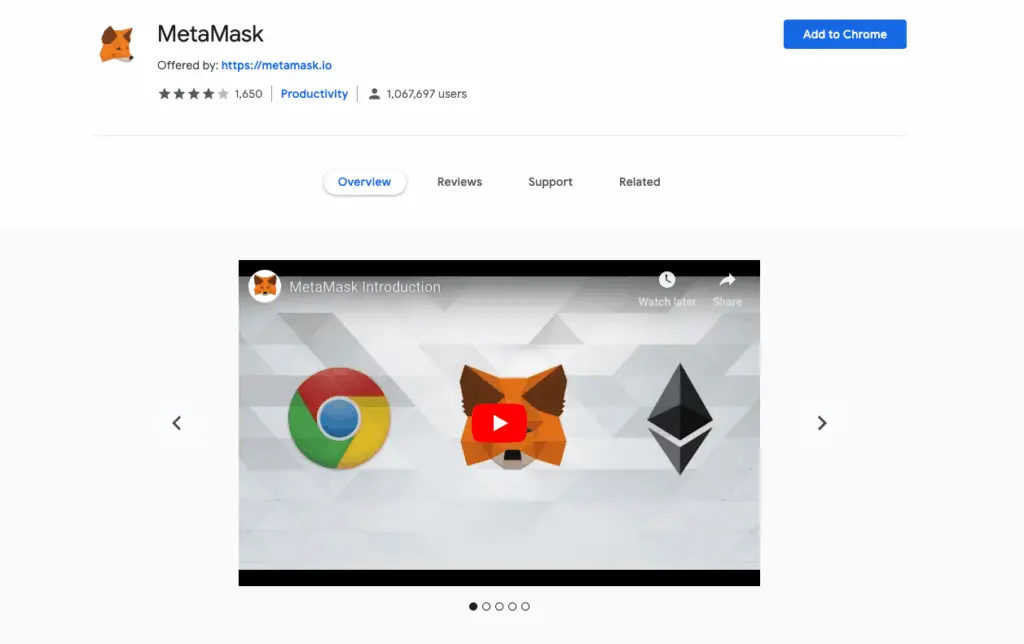
Once the extension is installed, the fox sits in the toolbar.
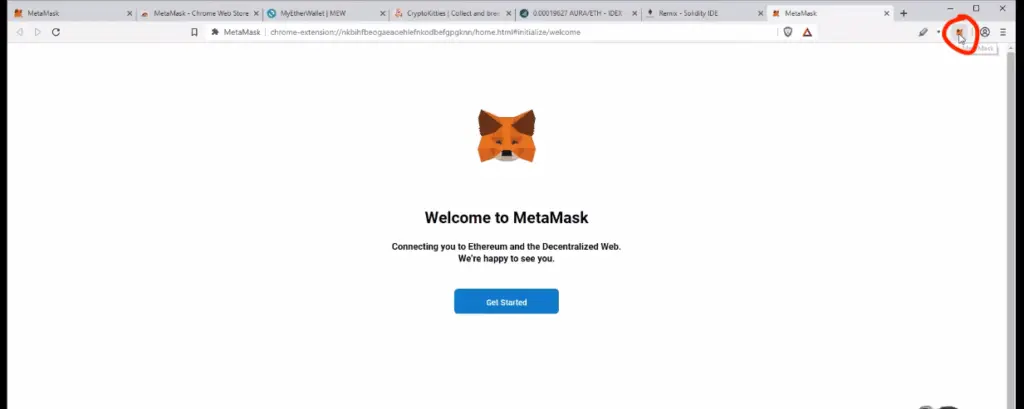
Create a new wallet
Open MetaMask and choose Create a new wallet. You then pick how to secure it:
- Secret Recovery Phrase. MetaMask shows a 12-word English phrase. Copy it in that English wording and do not translate it. Store it offline, somewhere only you can open. This is the recovery method on mobile and on the extension.
- Social login (extension only). You can link Google, Apple, or Telegram and set a MetaMask password. Both are required. MetaMask cannot reset a forgotten password. If you lose the social account or the password, the social login cannot be used to get back in. The SRP still exists in the background, and restoring with that phrase works, but MetaMask says that path no longer connects to the Google, Apple, or Telegram login. Reveal the phrase while you still have the wallet unlocked: on the extension, open Settings, then Security and password, then Manage wallet recovery, and choose Reveal. On mobile, open Settings, then Security and privacy, then Reveal Secret Recovery Phrase. You can also open the account menu, choose Account details, then Secret Recovery Phrase. Confirm the prompts, enter the password, and hold to reveal it. Write the words down and keep that paper offline.
MetaMask’s own password tips: generate a new password you have never used, and do not save it in an unlocked note or a cloud doc. A password manager is a reasonable way to generate that password. Treat a compromised password manager as a real risk if that password plus the linked Google, Apple, or Telegram account can unlock the wallet.
Set the password, confirm the recovery method the app asks you to confirm, and only then move crypto in. If you already have a wallet, choose the existing-wallet option and restore it inside this install. Do not type the phrase into a webpage that merely looks like MetaMask.
How does MetaMask work?
MetaMask stores keys locally and asks you to sign each transaction. It does not hold a balance on your behalf the way an exchange does. The accounts come from the Secret Recovery Phrase. On current versions (Mobile 7.57 and Extension 13.5 onward), one account carries separate addresses: one EVM address that works across Ethereum-compatible networks, one Solana address, and one Bitcoin address. Selecting the token tells MetaMask which address to use.
For Ethereum and other popular networks, MetaMask talks to the chain through a default node provider, Infura, unless you add your own RPC. A signature from your key is what moves funds. There is no support desk that can reverse a confirmed transaction. If you want the wider picture of how Ethereum charges fees and how staking fits in, our Ethereum 2.0 explainer covers the network this wallet sits on.
How to buy crypto on MetaMask
You can buy inside MetaMask Mobile and the extension. MetaMask’s buy guide covers Mobile 7.61 or later and Extension 13.48 or later. The quote screen changes by country, so treat the buttons in your app as the live list.
MetaMask does not sell you the crypto itself. It collects quotes from payment companies, you pick one, and that company handles identity checks, the card or bank payment, and the on-chain delivery. MetaMask’s buy FAQ says users in 170+ countries can buy through at least one provider. If your country is missing, buy on an exchange and withdraw to MetaMask, or receive a transfer from someone you trust.
Buy in the extension or mobile app
- Open MetaMask and select Buy under the account balance. In MetaMask Portfolio, open Move crypto, then Buy.
- Choose the token and the network. You can search by name or contract address.
- Enter the amount you want to spend.
- Choose a payment method. You can change the provider on this screen. MetaMask pre-selects one based on ease of use and what is available where you are. Quotes refresh about every 10 seconds.
- Finish checkout. In regions where Transak’s native flow is offered, identity verification and payment stay inside MetaMask. Other providers open their own checkout.
- Confirm the order. The crypto shows up in the wallet after the provider’s transfer confirms. Pending buys appear in Activity.
Documented payment methods are a card, a bank transfer, or Google Pay or Apple Pay, where the quote offers them. PayPal is one of the US providers, and MetaMask says you have to select PayPal on the payment method screen to use it.
The amount of crypto you receive is lower than the fiat figure you typed. The quote splits a processing fee (which includes MetaMask’s fee) and a network fee. MetaMask’s buy FAQ says its own fee is 1% of the fiat amount you request, across regions, payment methods, providers, and tokens. If the bank charge goes through and the crypto does not, contact that provider’s support. MetaMask does not run the payment.
Buy providers and networks, checked October 2026
Provider availability follows your country. MetaMask’s provider article says users in the United States can currently choose from:
- Banxa
- Coinbase Pay
- Koywe
- Meld
- Mercuryo
- MeshConnect
- MoonPay
- Onramp.money
- PayPal
- Ramp.network
- Revolut
- Robinhood
- Sardine
- Stripe
- Topper
- Transak
That US list will change. If a name is missing from your quote screen, you cannot use it, even if it appears here. Coinbase Pay, opened from Buy, can also move an existing Coinbase balance into MetaMask.
The same help page lists these networks for buying:
- EVM: Ethereum mainnet, Optimism, Arbitrum, Base, Linea, Polygon, BNB Chain, Avalanche C-Chain, zkSync Era, Cronos, Gnosis, Monad, Sei, HyperEVM, MegaETH
- Other: Bitcoin, Solana, Tron
Buy on the network where you actually want the tokens. ETH purchased on Ethereum mainnet is not the same balance as ETH on Arbitrum or Base.
How to swap and bridge crypto in MetaMask
Buying uses a card or bank payment; swapping exchanges crypto you already hold. A bridge moves assets between networks. Merely switching the network displayed in your wallet does not move your funds.
- Open Swap in the extension or mobile app.
- Select the token and network you are sending from.
- Select the token and destination network you want to receive on. Choose the same network for a same-chain swap, or a different network for a cross-chain route.
- Enter the amount, then review the quote, fees and expected amount received before confirming.
MetaMask aggregates routes; it does not supply the liquidity itself. A cross-chain transfer can take longer than a same-chain swap, and a quoted arrival time is an estimate. Start small when trying a new route. See the official MetaMask Swaps guide for the current workflow and supported routes.
What is a MetaMask smart account?
Smart accounts add features such as transaction batching and sponsored gas where the network and dapp support them. They keep your existing address and funds in place; your recovery phrase and private keys still control the account. They do not make every transaction free.
MetaMask says smart accounts are automatically enabled for new users. To manage an account, open the account selector, choose its three-dot menu, then Account details → Smart account on the extension, or Smart account on mobile. Toggles apply per network. Manually enabling or disabling the feature requires a confirmation and gas. Follow MetaMask’s smart-account instructions inside the wallet; an email asking you to upgrade is a scam.
How to receive crypto in MetaMask
Receiving is a normal transfer to your address. On the extension, click network addresses under the account name and copy the address for that network. On mobile, tap the copy icon on the home screen and pick the address. Paste it into the exchange or the wallet that is sending.
- The EVM address starts with
0xand is shared across Ethereum, Base, Arbitrum, and other EVM networks. The sender still has to withdraw on the matching network. - Bitcoin uses a different address. MetaMask’s Bitcoin guide says new accounts use Native SegWit, and you can only send and receive with Native SegWit addresses. Importing a Bitcoin private key is not supported. Importing the Secret Recovery Phrase restores the Bitcoin, Solana, and EVM addresses together.
- Solana uses its own address for SOL and SPL tokens. Private-key import and Ledger Solana accounts are not available, according to MetaMask’s Solana guide. Import with the SRP instead.
Send a small test first when the exchange and the address format are new to you.
How to send crypto from MetaMask
You need two things: the token you want to send, and enough of the fee token to pay the network. On Ethereum that fee token is ETH, and mining is no longer how the chain runs. For proof of stake, staking, and why a Layer 2 transfer is often cheaper, see Ethereum 2.0 explained. On Polygon the fee token is POL. On BNB Chain it is BNB. Bitcoin fees are paid in BTC, and Solana fees in SOL. Two networks in MetaMask’s supported list do not use a chain-native gas token: Arc uses USDC, and Tempo accepts pathUSD, USDC.e, or USDT0.
On the browser extension
- Click Send on the homepage. Switch accounts from the account dropdown if you need a different one.
- Select the network and the token.
- Paste the recipient address, or choose one from the address book.
- Enter the amount and click Continue.
- Review the estimated network fee. You can adjust it. Check the address again, then click Confirm.
- Track it on the Activity tab. On Extension 13.30 and later, Ethereum, Linea, BNB Smart Chain, Arbitrum, Base, and Polygon also show a “Transaction submitted” toast in the sidebar.
On the mobile app
- Tap Send on the homepage.
- Select the network and the token.
- Enter an amount, or use the 25% and 50% shortcuts.
- Tap Continue.
- Paste the address or pick it from the address book.
- Review the details and tap Confirm.
MetaMask warns you when an address is new or looks similar to one you have used. That warning matters. Address lookalikes are a common way people lose funds, which we cover in the MetaMask address poisoning guide. A confirmed send cannot be reversed. While an EVM transaction is still pending, Speed up or Cancel replaces it with another transaction that uses the same nonce and a higher fee.
How to connect MetaMask to a website
Connecting lets a site see the account address you approve and suggest transactions. It does not give the site your Secret Recovery Phrase, and it does not send funds until you confirm a later prompt.
- On the site, click Connect (the wording varies) and choose MetaMask.
- The MetaMask prompt shows the account the site wants. Use Edit accounts if you want a different account connected.
- Open the Permissions tab and use Edit next to accounts or networks. Enabled networks are selected for you. A multi-chain site can switch among the networks you leave enabled without asking each time.
- Click Connect.
You still approve every swap, mint, or token approval yourself. Read the token and the spender before you confirm an approval. Before you approve a dapp, check whether that protocol published an audit and whether the deployed code matches the reviewed commit. A public audit does not make a signature safe. Our smart contract audit company comparison explains what to look for, and what a cheap report leaves out.
If the extension prompt never appears, another wallet extension is usually grabbing the page. Turn the other wallet off, reload, and try again. MetaMask’s troubleshooting page lists the extension managers: chrome://extensions, brave://extensions, about:addons on Firefox, and edge://extensions. On Brave, also set Default Ethereum wallet to None, as in the install section.
To disconnect on the extension, open the menu in the account view and choose Dapp connections, or open All Permissions from the top-right menu. Select the site and disconnect. On mobile, open the site from the Explore tab, tap the account icon, and choose Disconnect all.
Disconnecting does not revoke token approvals. If you granted a contract permission to spend a token, that allowance can remain after you disconnect the website. Review and revoke unwanted allowances with the official token-approval revocation guide. Revocation is an on-chain action and normally costs gas.
MyEtherWallet, if you still need it
MyEtherWallet is one Ethereum website among many. You do not need it to set up MetaMask, buy, send, or add a network. If you do open it, check the URL, connect with the steps above, and disconnect from Dapp connections when you are done. Beginners can skip it.
How to add and switch networks in MetaMask
Ethereum mainnet is the default EVM network. Many other networks are already supported and can be switched on without typing RPC details. MetaMask’s add-network guide lists Ethereum, Bitcoin, Linea, Base, Solana, Tron, Polygon, BNB Chain, Arbitrum, Monad, Robinhood Chain, OP (Optimism), Sei, Avalanche, zkSync Era, MegaETH, HyperEVM, Arc, and Tempo. Bitcoin and Solana do not live in the EVM network menu. Use the address selector described in the receive section.
Switch or add a listed network
- Extension: open the top-right menu and choose Networks. Under Additional networks, click Add next to the network, or search for it. You can also use the network dropdown and the + control.
- Mobile: tap the network dropdown at the top of the Tokens tab, scroll to Additional networks, and tap +.
A network added on the extension does not appear automatically on mobile, and the reverse is also true. If you reinstall the app, custom networks have to be added again after you restore the wallet.
Add a custom network
If the network is not in the list, use Add a custom network. On the extension that button is on the Networks screen. On mobile, open the network dropdown, switch to the Custom tab, and tap Add a custom network. The form asks for the network name, the network URL (the RPC endpoint), the chain ID, the currency symbol, and an optional block explorer URL. Save only details you copied from the project’s own documentation.
MetaMask does not verify custom networks. A site can request an add, and MetaMask will show you the name, URL, chain ID, symbol, and explorer it was given. Trust that prompt only as far as you trust the site.
Another route is Chainlist at chainid.network. Connect MetaMask, search for the network, click Add Chain, then Confirm in the wallet. On mobile, open that site from the Explore tab. MetaMask does not maintain the listings there. Check the chain ID against the project’s docs before you confirm.
Test networks
Test networks stay hidden until you turn them on. Open the menu, choose Networks, and enable Show test networks at the bottom of the list. You can edit a testnet from the three dots beside it, or add one with Add a custom network. Sepolia is the Ethereum testnet MetaMask recommends for app development, and it is available once test networks are visible.
How to sell crypto and cash out from MetaMask
Selling inside MetaMask uses the same idea as buying: MetaMask shows quotes, and a provider pays fiat to a bank account you connect on that provider’s site. MetaMask does not hold your bank login.
Open Sell from MetaMask Portfolio, or from the extension’s Move crypto menu, then Sell. On mobile you can sell without leaving the app: open the Sell tab and tap Get started the first time, or tap the actions button on the homepage and then Sell.
- The first time, choose the country where the bank account is registered. US users then pick a state. If no provider covers that region, MetaMask says so on this screen.
- Enter the amount and pick a quote. Quotes refresh so the rate is current.
- The provider’s site asks for identity checks if you are new, and for the bank account that should receive the money.
- Return to the Sell screen and confirm the on-chain send. MetaMask’s guide labels this button Send ETH.
- Confirm in MetaMask. Order history sits behind the button at the top right of the Sell or Buy section.
MetaMask’s sell FAQ lists four providers: Transak, MoonPay, Sardine, and Banxa. It lists coverage as the United States, the United Kingdom, and parts of Europe. Supported tokens and networks vary by country, and the Sell tab is the list that applies to you. The fee note in that FAQ is written for selling ETH on Ethereum mainnet: you pay gas in ETH, because the sale sends ETH to the provider. MetaMask says it receives a 1% fee from providers on these sales, similar to buys.
Payout lands in the bank account you added on the provider’s site. MetaMask says SEPA (Europe) and Faster Payments (UK) can arrive once the provider finishes the order, and US bank payouts can take 1–3 business days. If Portfolio shows Complete and the bank is still empty after a few days, contact the provider.
If Sell is unavailable where you live, MetaMask’s regional FAQ says to send the tokens to an exchange that supports that network and token, sell there, and withdraw. Keep enough of the fee token to pay gas. Examples MetaMask’s own receive guides mention include Coinbase and Binance. Check the exchange’s deposit network before you send.
How to collect airdrops with MetaMask
A project airdrop is a token distribution with rules the project sets. MetaMask can hold the tokens and sign the claim. It does not mean every “claim” page is real.
- Open the project’s official site and check the URL before you connect.
- Connect with the steps above, on the network the claim uses.
- Read the transaction. A claim can be a transfer, or it can be an approval.
- Confirm, then disconnect the site when you are finished.
For campaigns MetaMask itself runs, open the Rewards tab inside the official app and opt in there. MetaMask’s Rewards page says the program pays for actions you already take with sponsors, and that it is not a $MASK token. Each campaign has its own dates, regions, and costs. Read those terms in the app. Gas, swap fees, and token approvals are real costs even when the reward is uncertain.
How to get free Ethereum on MetaMask
MetaMask does not give away mainnet ETH. The free ETH in the official docs is test ETH for developers, used on a test network so a mistake does not spend real money.
- In MetaMask, open Networks and turn on Show test networks.
- Select Sepolia. MetaMask recommends Sepolia for application testing, and it is included once test networks are visible.
- Request Sepolia ETH from the MetaMask Developer faucet described in MetaMask’s faucet guide. You connect a wallet that is linked to a MetaMask Developer Dashboard account, then click Request ETH.
That balance lives on Sepolia. It cannot be cashed out or sent to Ethereum mainnet, and it has no real-world value. Linea’s own docs are the place to check for Linea Sepolia test ETH. If you need ETH you can spend, use Buy or an exchange withdrawal onto mainnet.
Is there free ETH on MetaMask? Watch for scams
A testnet faucet is not income. Never send crypto to “unlock” free mainnet ETH, and never enter your recovery phrase to claim a reward. Treat unsolicited tokens and claim links as suspicious. Copy a recipient address from a trusted source, not a recent transaction: scammers can seed your history with lookalike addresses. Our MetaMask address-poisoning guide explains that trap; the crypto wallet safety guide covers other ways funds get stolen.
Boxmining’s Take: keep everyday amounts practical
For everyday amounts, an up-to-date iPhone with a reputable self-custody app is a reasonable hot wallet. A hardware wallet is not something everyone needs to carry daily. Keep the recovery backup offline, use a strong device passcode, and be selective about what you sign. The amount at risk matters more than collecting security gadgets.
For large long-term holdings, separating cold storage from your spending wallet makes sense. Compare the trade-offs in our hot vs cold wallet guide and hardware wallet comparison. Neither approach protects you from approving a malicious transaction.
Further MetaMask tips
After the basics, the useful extras are fee control, pending transactions, a hardware wallet, and an address book:
- On EVM networks you can raise or lower the network fee before you confirm, which trades speed against cost.
- Speed up or Cancel only works while the transaction is pending.
- A Ledger can sign supported EVM transactions so the key is not only on the computer. MetaMask’s Solana guide says Ledger Solana accounts cannot be connected yet. The Trezor Safe 5 is the other hardware wallet we have reviewed for larger balances.
- Save addresses you use often in the address book, and still read the warning when MetaMask flags a new or lookalike address.
More MetaMask questions
How do I send crypto from MetaMask?
Click or tap Send, choose the network and token, paste the address, enter the amount, review the fee, and confirm. Keep enough of that network’s fee token to pay gas, and read any warning about a new or similar address.
How do I cash out to fiat?
Use Sell in MetaMask Portfolio or the mobile app where it is offered. MetaMask lists Transak, MoonPay, Sardine, and Banxa, with coverage in the US, UK, and parts of Europe, and pays the bank account you add on the provider’s site. Otherwise send the crypto to an exchange that supports the same network.
Is MetaMask secure?
It can be, if you keep the Secret Recovery Phrase offline and never share it, install only the official app, and read every signature. MetaMask cannot stop a phishing site you choose to trust. A hardware wallet reduces exposure for larger balances.
Does MetaMask support Bitcoin and Solana?
Yes. Each multichain account has a separate EVM address, a Native SegWit Bitcoin address, and a Solana address. Private-key import is not available for Bitcoin or Solana, and Ledger Solana accounts cannot be connected yet.
Does MetaMask have a $MASK token?
MetaMask’s Rewards help page says Rewards is not a $MASK token and that there are no plans for one at this time. Open Rewards inside the official app rather than from a link in a message.
Can I cancel a MetaMask transaction?
Only while an EVM transaction is still pending. Cancel or Speed up submits a replacement with the same nonce and a higher fee. A confirmed transaction cannot be reversed.
Frequently asked questions
How do I set up a MetaMask wallet?
Install from metamask.io or the official mobile store, choose Create a new wallet, then secure it with a 12-word Secret Recovery Phrase. On the extension you can instead use Google, Apple, or Telegram plus a password. Both of those are required, and MetaMask cannot reset either one.
How do I buy crypto on MetaMask?
Tap Buy under the balance, pick the token and network, enter an amount, and choose a payment method and provider. The quote screen shows only providers available in your region. MetaMask’s US list, as of October 2026, includes Transak, MoonPay, Coinbase Pay, PayPal, Ramp, Banxa, and others.
How do I use MetaMask?
Create the wallet, protect the recovery method, then buy or receive crypto, send it, and connect to sites you have checked. Use the EVM address for Ethereum-compatible networks and the separate Bitcoin or Solana address for those chains.
How does MetaMask work?
It is a self-custodial wallet. Your accounts are derived from a Secret Recovery Phrase kept on your device, and you sign each transaction. MetaMask does not custody the funds and cannot reverse a confirmed transfer.
How do I connect MetaMask to a website?
Click Connect on the site, choose MetaMask, edit the accounts and networks in the permissions prompt, then click Connect. Disconnect later from Dapp connections or All Permissions. Another active wallet extension is the usual reason the prompt never appears.
How do I get free Ethereum on MetaMask?
MetaMask does not give away mainnet ETH. You can request Sepolia test ETH from the MetaMask Developer faucet after you turn on Show test networks. Test ETH cannot be moved to mainnet or cashed out.
Disclaimer: Cryptocurrency trading involves significant risks and may result in the loss of your capital. You should carefully consider whether trading cryptocurrencies is right for you in light of your financial condition and ability to bear financial risks. Cryptocurrency prices are highly volatile and can fluctuate widely in a short period of time. As such, trading cryptocurrencies may not be suitable for everyone. Additionally, storing cryptocurrencies on a centralized exchange carries inherent risks, including the potential for loss due to hacking, exchange collapse, or other security breaches. We strongly advise that you seek independent professional advice before engaging in any cryptocurrency trading activities and carefully consider the security measures in place when choosing or storing your cryptocurrencies on a cryptocurrency exchange.
Share
Found this useful?
Share it with someone who'd want to read it.
Related

MetaMask Integrates PayPal Payment in the U.S. for Easier ETH Purchases
MetaMask developer ConsenSys has announced the integration of a PayPal payment option to its software wallet.
Opyn Token Airdrop Guide and Snapshot Status (Completed)
A historical guide to the completed Opyn snapshot campaign, including the Ethereum options protocol, eligibility speculation and original steps.
ParaSpace Token Airdrop Guide (Completed)
ParaSpace recently introduced an incentive program in which users’ actions and activities earn points that can be redeemed for ParaSpace…