
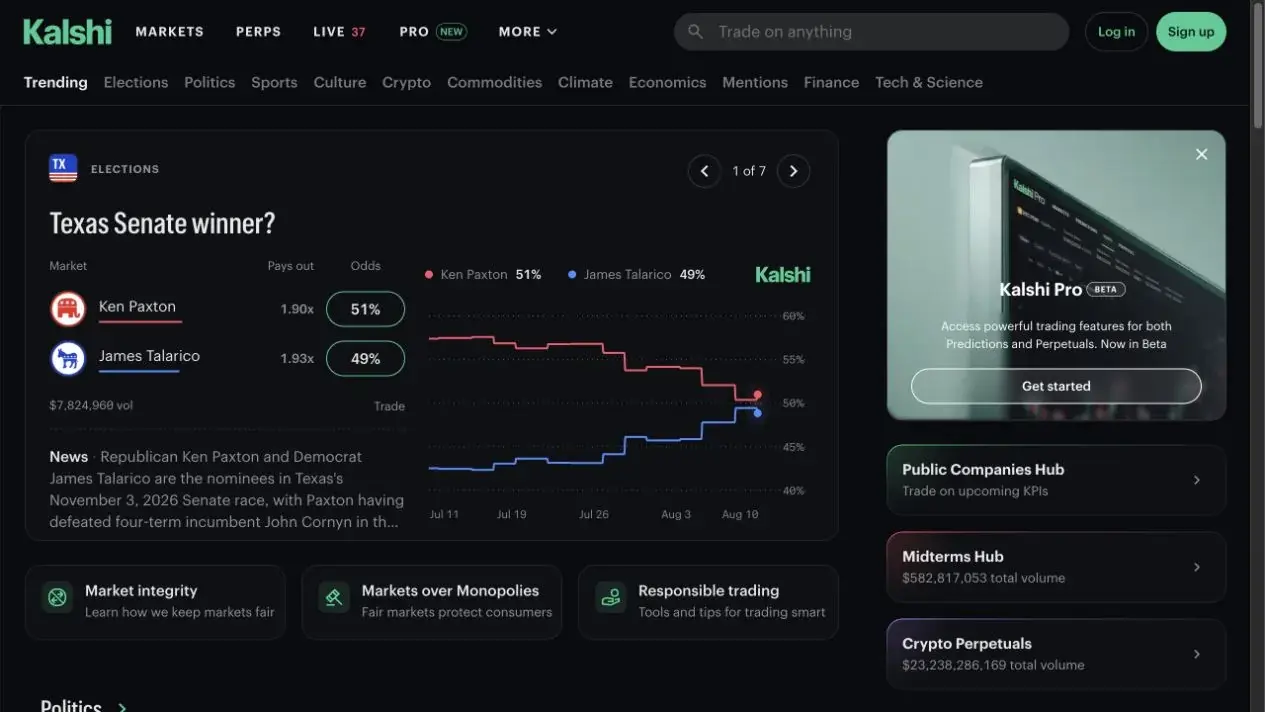
Exchange Review
Reviewed by Michael Gu · Five-pillar methodology
Our top regulated prediction-market pick: a polished dollar-based exchange with broad event coverage and unusually strong compliance. Variable fees and uneven liquidity in smaller contracts keep it short of a perfect score.
Trustworthiness
Coin Diversity
Liquidity
Regulatory Compliance
User Experience
Kalshi is a US-regulated exchange for trading event contracts. You can buy “Yes” or “No” on elections, economic data, company results, weather, sport and other measurable outcomes. A contract bought for 66 cents pays $1 if it wins and $0 if it loses. You can sell before settlement if another trader is willing to take the other side.
That sounds similar to Polymarket, but the products grew from different roots. Kalshi looks and behaves like a regulated financial exchange. It requires identity verification, publishes contract rules, supports dollar funding and operates KalshiEX as a Commodity Futures Trading Commission designated contract market. The result is a platform that feels more familiar to a US brokerage customer than to a DeFi trader.
Kalshi is our top overall pick for users who value regulation and conventional funding. The trade-off is cost and paperwork. Trading fees vary by market, debit-card deposits can cost 2%, and every trader must complete identity checks. Liquidity is excellent in some headline markets and unimpressive in others.
Kalshi pros and cons
What we like
- Kalshi has the strongest regulatory framework of the major retail prediction markets we reviewed.
- Contracts use familiar dollar prices and settle to $1 or $0 in the usual binary case.
- US users can fund through ACH without a processing fee. Debit cards, wires, crypto and several payment apps add flexibility.
- The market range now covers far more than elections. Economics, sport, climate, crypto, culture and company metrics are easy to browse.
- Each market links to a rules summary and full contract rules, including the verification source.
What could be better
- Trading is not free. Fees depend on contract price, order type and market-specific schedules.
- Full identity verification is mandatory and may require a government ID and selfie.
- Smaller markets can have wide spreads or very little resting liquidity.
- International accounts have fewer payment methods than US accounts, and some countries remain ineligible.
- A polished buy ticket can tempt beginners to skip the contract rules.
How Kalshi trading works
Kalshi prices event contracts between 1 and 99 cents. The price is often read as the market’s probability. A “Yes” contract at 66 cents suggests a 66% chance, while the corresponding “No” side sits near 34 cents. Opposing buyers together provide the $1 that backs the winning payout.
The exchange matches orders from traders with different views. You can take the current available price or place an order at a price you prefer. As with any order book, a displayed probability is not a guaranteed execution price. The bid is what someone will currently pay, the ask is what someone will currently accept, and the gap between them is your spread.
Kalshi’s pricing guide explains the basic matching model. The contract price moves as traders update their orders. If new information makes an outcome more likely, buyers may bid up “Yes” and sellers may demand more to part with it.
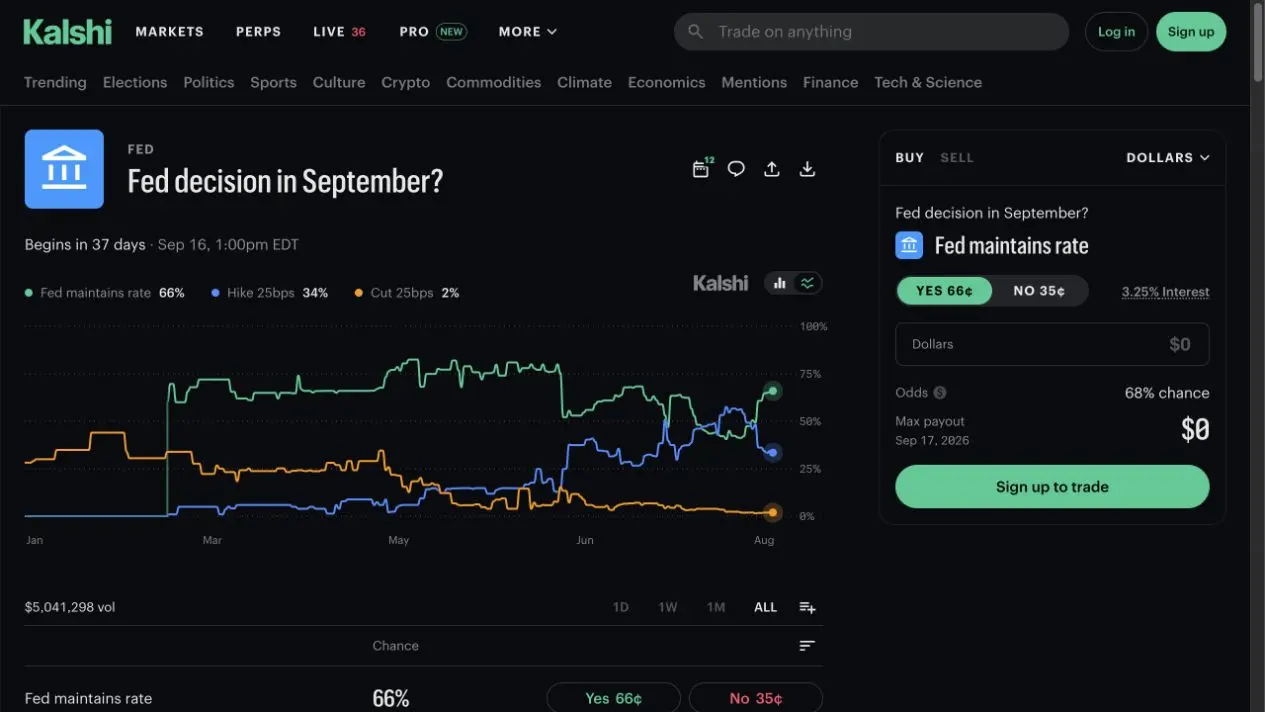
The market page is well organized. The chart makes it easy to see how expectations changed, and the order panel translates the selected price into maximum payout. Scroll down before trading. The rules and source agency are more important than the chart when settlement arrives.
Fees
Kalshi charges trading fees based on expected contract earnings. The formula generally makes fees largest around the middle of the probability range and smaller near the extremes. Some markets use special schedules, and resting maker orders can have different fees from orders that execute immediately.
There is no honest one-line fee percentage for every Kalshi trade. The official fee guide directs users to the full schedule and says the applicable amount appears from the information icon beside the order preview. Check that number before submitting. It is the closest equivalent to reviewing a futures exchange’s contract-specific fee table.
Funding costs are separate. ACH bank transfers, wire, PayPal and Venmo deposits currently have no Kalshi processing fee. Debit-card deposits may incur a 2% fee. Crypto transfers can add provider and blockchain costs. Withdrawal methods can also be subject to holds even when Kalshi does not charge a withdrawal fee.
Spread remains the hidden cost. Suppose the last price is 50 cents but the best ask is 54 cents. Crossing the book costs four cents per contract before the explicit fee. On a contract with a maximum $1 payout, that difference is meaningful.
Deposits and withdrawals
US users get the most complete set of funding options. Kalshi’s bank-deposit guide lists a $10 minimum, no ACH deposit fee and settlement that can take up to five business days. Kalshi may make part of a deposit available sooner, but those funds can remain subject to withdrawal restrictions until the bank transfer settles.
Debit cards are quicker and available to both US and international users, although the 2% processing fee can erase the edge on a short-term trade. Apple Pay and Google Pay can route eligible debit transactions. US users may also see PayPal, Venmo or Cash App, while wires are better suited to much larger transfers.
International users have a narrower menu. Kalshi says debit card, crypto and wire deposits may be available depending on location. ACH, PayPal and Venmo are US-only. For international withdrawals, debit cards and crypto are the main routes.
Kalshi applies security holds based on how funds arrived. This is normal for a regulated account, but it matters if you expect to withdraw immediately after a market settles. Check the withdrawable cash balance rather than assuming the headline account balance can leave the platform.
Markets and liquidity
Kalshi’s 2026 product is much broader than its early reputation as an economics market. The homepage now gives prominent space to elections, Federal Reserve decisions, sport, commodities, crypto, climate, company reports, technology and entertainment. It also groups several outcomes under one event, which makes comparing mutually exclusive scenarios straightforward.
Liquidity varies sharply. In our live review, featured election and Fed markets showed multi-million-dollar volume. Lower-profile contracts sometimes showed only hundreds or thousands. Volume is useful history, but the order book determines whether you can enter or exit now.
Before trading, inspect:
- The best available price on your chosen side.
- The spread between the highest bid and lowest ask.
- The number of contracts available at each price level.
- The event deadline and expected settlement time.
- Any special fee schedule shown on the ticket.
A market with a fascinating question is not automatically a good market to trade. If the spread is wide and the book is shallow, being right may still produce a poor return. Use limit orders when you have a specific fair value and can wait.
Rules and settlement
Kalshi settles markets using the source and criteria named in each contract’s rules. A government release, league statistic, official result or other named authority may control the determination. The platform’s market rules guide warns traders to read the rules before opening a position.
Most straightforward markets settle within a few hours after the official outcome becomes available, according to Kalshi’s settlement FAQ. Some take longer because the source agency has not published final data or the contract specifies a later determination time. Trading close time and settlement time are not always the same.
This is where prediction-market beginners make avoidable mistakes. A headline can say one thing while the contract asks a narrower question. If the rule requires a specific government series at a specific release time, a news article or preliminary estimate may not count. Read the full rules, not only the friendly summary.
Is Kalshi safe?
KalshiEX is a CFTC-designated contract market. The CFTC describes it as such in its own prediction-markets enforcement advisory, which also discusses enforcement involving improper trades and material non-public information. That oversight is one of Kalshi’s strongest advantages.
Regulation does not insure a trader against a bad prediction. Contracts can lose 100% of their purchase value. Accounts can be compromised, deposited funds can be held while a transfer clears, and a trader can misread a market rule. Regulatory status improves the operating framework; it does not turn event contracts into savings products.
Kalshi requires account verification and may ask for a driver’s licence or passport. Its verification guide says document images go to a third-party verification provider, while Kalshi retains other information required for compliance and audit. Users who are uncomfortable giving a regulated exchange their identity documents should understand that they cannot trade anonymously here.
Use a strong, unique password and enable available multi-factor authentication. Review active sessions and withdrawal details. Treat unexpected support messages, promotion links and login pages as potential phishing attempts.
Countries and eligibility
Kalshi is no longer strictly a US-only platform. Its international access guide says people in many countries can apply, subject to the Member Agreement and local law. Every user must verify identity and country of residence.
Eligibility is not universal. The Member Agreement lists restricted jurisdictions, and available payment methods depend on the account’s country. International access also does not mean every product is available everywhere. For example, newer leveraged products can have separate applications and regional limits.
Do not assume that being able to load the homepage means you can legally trade. Check eligibility during signup and confirm that event contracts are permitted where you live. Do not use a VPN to disguise location.
Kalshi compared with Polymarket
Kalshi and Polymarket now overlap across politics, economics, sport, crypto and culture, but their core trade-offs remain distinct.
Kalshi is stronger on federal US regulation, bank funding and a conventional identity-verified account. Its rulebook and source-based settlement process resemble a derivatives exchange. It is the easier product to explain to someone coming from a brokerage.
Polymarket.com is stronger for crypto-native international users. Its non-custodial Polygon settlement, broad breaking-news catalogue and fast market discovery feel closer to DeFi. The international site also has extensive geographic restrictions, while US residents use a separate Polymarket US app.
Liquidity should be compared market by market. A platform can lead overall volume and still offer a worse price in the one contract you want. Open both eligible venues, compare the exact rules, then compare bid, ask, depth and fees. Similar headlines do not guarantee identical settlement criteria.
Who should use Kalshi?
Kalshi suits users who want a regulated account, dollar pricing and clear contract documents. It is particularly attractive to US traders who can fund by ACH and to researchers who want market prices across elections, macro data and other measurable events.
It is less attractive if you want anonymous trading, cannot pass identity verification or live in a restricted country. High-frequency traders also need to model the fee formula carefully. A small informational edge can disappear after fees and spread.
Beginners can use Kalshi, but they should start with small positions in liquid markets. The interface makes a contract feel simple. The actual work is estimating a fair probability, understanding the rule and deciding whether the available price leaves enough margin for error.
Kalshi review verdict
Kalshi has built the most complete regulated retail prediction-market package we have reviewed. The interface is polished, the catalogue is broad and the CFTC framework gives it a clearer operating structure than most competitors. Dollar funding also removes the chain and wallet mistakes that can trip up first-time Polymarket users.
Fees, identity checks and patchy liquidity in small markets are the costs of that package. None is a deal-breaker, but all three should affect how you trade. Use limit orders, read the complete rules and check the fee on every order preview.
We score Kalshi 93/100. It is our preferred prediction market for users who prioritize regulation and conventional funding. Crypto-native international traders may still prefer Polymarket’s custody model and discovery interface, provided they are eligible to use it.
Kalshi FAQ
What is Kalshi?
Kalshi is a CFTC-designated contract market where eligible users trade Yes and No event contracts on defined outcomes such as economic releases, elections, weather and sport.
How does a Kalshi event contract pay out?
A winning contract settles at $1 and a losing contract at $0. Traders can also sell before settlement if there is a willing counterparty.
Is Kalshi regulated?
Yes. KalshiEX is designated by the Commodity Futures Trading Commission as a contract market. Regulation does not prevent trading losses or guarantee that a prediction is correct.
Does Kalshi require identity verification?
Yes. Users must verify identity and residence, and Kalshi may request a driver's licence or passport. Anonymous trading is not available.
Can people outside the United States use Kalshi?
People in many countries can apply, subject to Kalshi's current Member Agreement, restricted-jurisdiction list and local law. Product and payment availability can differ by country.
What is the minimum Kalshi bank deposit?
Kalshi's US bank-deposit guide lists a $10 minimum. ACH deposits have no stated deposit fee but can take up to five business days to settle.
How much are Kalshi trading fees?
There is no single percentage for every trade. Fees depend on the contract and order, so users should inspect the amount displayed in the order preview and current official fee schedule.
How does Kalshi settle a market?
Kalshi applies the source, deadline and criteria in that market's contract rules. Trading close and final settlement can occur at different times.
What is the difference between Kalshi and Polymarket?
Kalshi emphasizes a regulated, identity-verified account and conventional dollar funding. Polymarket's international platform uses crypto-native, non-custodial settlement and has its own geographic restrictions.
Can a Kalshi contract lose all its value?
Yes. A contract that resolves against the position pays $0, so the purchase price can be lost in full. Spread, fees and poor liquidity can add further costs.
Risk warning: Event contracts can lose their full value. Prices reflect trader orders, not guaranteed probabilities. Check local eligibility, funding holds, fees, liquidity and the complete contract rules before trading.
Final Review: Kalshi
Our comprehensive analysis
Trustworthiness
Coin Diversity
Liquidity
Regulatory Compliance
User Experience
Our top regulated prediction-market pick: a polished dollar-based exchange with broad event coverage and unusually strong compliance. Variable fees and uneven liquidity in smaller contracts keep it short of a perfect score.

Share
Found this useful?
Share it with someone who'd want to read it.
Related
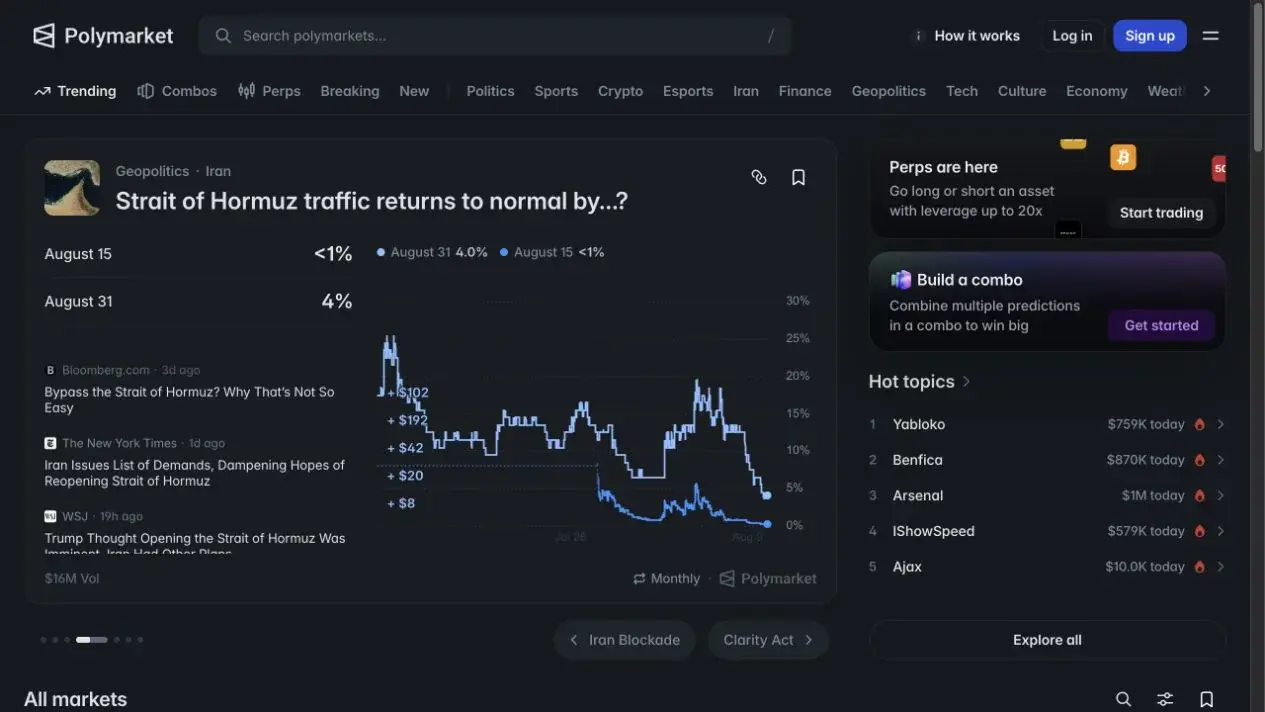
Polymarket Review (2026): Best Crypto Prediction Market?
Polymarket combines crypto-native funding, prediction-market order books and non-custodial settlement. Review fees, liquidity, rules, safety and restrictions.
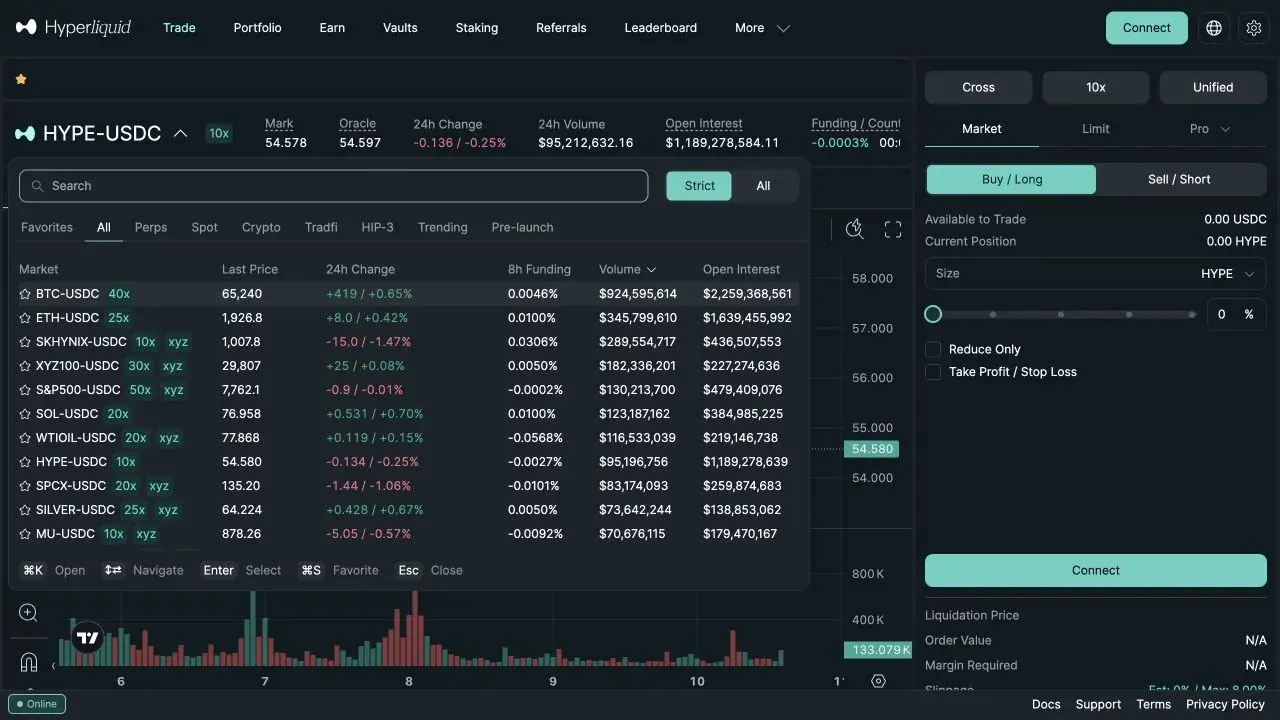
Hyperliquid Review (2026): Best Onchain Perpetual DEX?
Hyperliquid combines onchain perpetual order books, strong flagship liquidity and a polished terminal. Review its fees, leverage, bridge, safety and restrictions.

2026 Crypto Exchange Review Rating Criteria
Boxmining’s 2026 crypto exchange rating criteria cover trust, liquidity, regulation, coin access and user experience. Apply the same rubric yourself.