
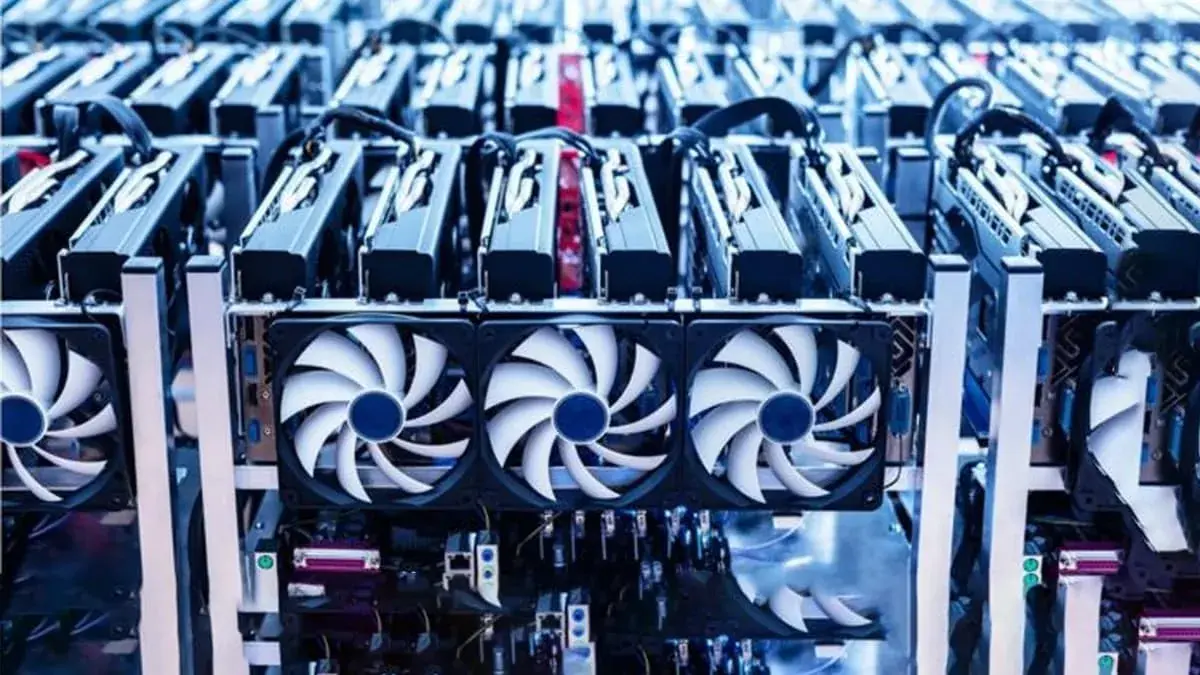
2026 update: Ethereum can no longer be mined. The Merge replaced proof-of-work with proof-of-stake on September 15, 2022, permanently ending mining as a way to produce Ethereum Mainnet blocks or earn ETH protocol mining rewards. There is no Ethereum 2.0 miner and no ETH2 coin. Staking replaced mining; the current explanation is Ethereum 2.0 explained. Do not buy hardware or install old mining software for the purpose of mining ETH. The sections below are preserved as historical documentation; profitability figures, pools, referrals, software and setup instructions are obsolete and may no longer be safe to use.
What is Ethereum Mining?
Before September 2022, Ethereum miners used computing hardware and electricity to compete to produce proof-of-work blocks and receive ETH rewards. GPUs were commonly used for this process. The mechanism described in this archive no longer exists on Ethereum Mainnet; validators who stake ETH now propose and attest to blocks.
Ethereum (ETH) is the cryptocurrency used on the Ethereum network – decentralized smart platform for running decentralized applications (dApps) and decentralized finance (DeFi). To learn more about Ethereum check out our Ethereum Guide.
Historical note: Ethereum’s planned transition to proof-of-stake was completed in 2022. Buying a GPU today does not enable a user to mine ETH.
How Profitable is Ethereum Mining?
Current answer: ETH mining revenue is zero because Ethereum no longer accepts proof-of-work blocks. Before The Merge, revenue varied with GPU hashrate, network difficulty, electricity costs and the ETH price. The figures below were calculated in October 2019 and are retained only to show the economics discussed at the time; they are not current estimates.
| Daily Revenue | Yearly Revenue | |
| Nvidia RTX 2080 | $0.50 | $182 |
| Nvidia GTX 1060 | $0.30 | $109 |
| AMD Vega64 | $0.54 | $197 |
| AMD RX480 | $0.40 | $146 |
Potential Revenue mining Ethereum (Calculated on Oct 29 2019)
We calculated the costs and profits for mining Ethereum, and how does it compare to Ethereum staking? Which one is better?
Ethereum (ETH) Staking or Mining | Which is More Profitable? (SURPRISING RESULTS)
Watch on YouTubeHistorical beginner method: Honeyminer
Do not use this section to install software. At the time of the original article, Honeyminer was described as an all-in-one mining solution that selected mineable coins and paid users in bitcoin. It cannot mine ETH after The Merge, and this article has not verified whether old downloads, fees or referral links remain valid.
Once installed, the software will automatically mine the best cryptocurrency (including ethereum) using all available hardware – both CPU and GPUs available on the machine. To see the daily revenue, open up the “see full activity panel” to get a breakdown of the hardware being used.
When Honeyminer is running, the computer’s hardware will get 100% utilized. It’s still run simple tasks on the computer, like web-browsing or composing emails. However, running video games or editing photos/videos will become slower. It is advised to turn-off honeyminer when doing resource intensive tasks.
It is important to note that Honeymoney will mine the most profitable cryptocurrency at the time (including ethereum) and convert the revenue into Bitcoin (displayed in Sats, satoshi). If you want to specifically mine ethereum and earn ethereum, check the advanced guide below.
One disadavantage of Honeyminer is the platform fees. Currently, Honeyminer takes 8% fee for the 1st GPU and 2.5% for additional GPUs. This means a portion of the revenue will go to Honeyminer. If you don’t want to pay platform fees, you can try the advanced Ethereum Mining option
The original referral download link has been removed because the software and destination are no longer part of a current Ethereum mining workflow.
Historical operating system requirements
To mine Ethereum, you can easily use any modern operating system: Windows 10, MacOS and Linux. For beginners, it’s suggested to try out HoneyMiner on either Windows 10 or MacOS to get the feel of mining. This is because it’s the easiest to setup up and can work alongside regular tasks on the computer. For higher mining performance, a dedicated linux based operating system is recommended – this allows for optimisation of the caching properties and remote management. Currently popular custom mining OS include: HiveOS, NicehashOS and ethOS.
How Ethereum mining worked (advanced archive)
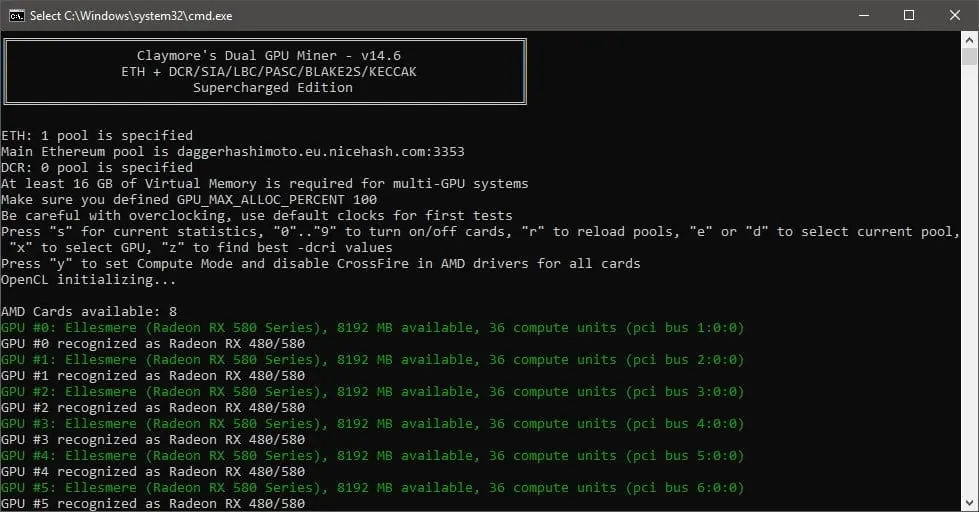
The original guide listed three Ethereum mining programs. They are not current ETH mining tools, and old binaries or forum links should be treated as untrusted unless independently verified. The historical list was:
To setup Ethereum, you need to have an Ethereum address. In order to get an address, you can look at our Enjin Wallet for a free software wallet or Ledger Nano X – a secure hardware wallet.
Ethereum pool mining (historical)
There are two main ways to mine ethereum – solo mining or pool mining.
Pool Mining (working together)
- Work with others to mine and share rewards
- Get paid per share, on a hourly or daily basis
- Less random / dependent on luck
- Pools take some fees (0.5-3% depending on pool)
Solo Mining
- You mine the entire block reward (3 ETH per block) – no pool fees
- Random Chance and probability – you can go days or months without rewards
- Not viable if Hashrate is low – single GPU will take years to mine a block
How Ethereum mining pools were selected
There are 2 factors to consider when picking a Ethereum mining pool – the location of the pool and it’s market share. The top priority would be location – the closer the pool is to you geographically the better. This is because sometimes due to network latency, shares that are mined could be “stale” – as new blocks are created rendering older blocks obsolete. It’s also important to know that Chinese servers are behind the Great Firewall of China, meaning that connections could periodically break. This means that choosing a server with low latency and close geographical location would give the highest yield.
The second factor is the market share of the pool. The larger the market share, the more consistent the rewards. This is because blocks are continuously mined by the pool, and hence they can pay out at a consistent rate. This reduces the impact of the randomness of block creation.
We recommend finding a pool close to your location with a high market share.
Is it possible to solo mine Ethereum in 2020
Currently it’s not feasible to solo mine Ethereum in 2020. It would take 67 years to solo mine a block (assuming 30 MHash/s and current total hashrate of 181 THash/s). This would mean it would likely take an entire lifetime before the solo miner finds a block with a single GPU.
When did Ethereum mining end?
Ethereum mining ended when The Merge executed on September 15, 2022. Proof-of-work was permanently replaced by proof-of-stake for Ethereum Mainnet block production. “Eth2” is also deprecated terminology; there is one Ethereum network with execution and consensus layers.
Ethereum Cloud Mining
In 2020, Ethereum Cloud mining contracts are not profitable. This is because mining has become more competitive with lower margins – forcing miners to reduce costs. Cloud mining is hit the hardest because of they have large overheads like advertising spends and legal costs. In our latest research, we found that cloud mining providers were charging 184% for the same hashrate than home-made solutions.
What was Ethereum ProgPoW?
ProgPoW was a proposed change to Ethereum’s former mining algorithm intended to make commodity GPUs more competitive with specialized hardware. It was not adopted before Ethereum ended proof-of-work, so it has no role in current Ethereum consensus.
Ethereum Mining Difficulty Bomb
Ethereum’s proof-of-work chain included a mechanism known as the difficulty bomb to make mining progressively harder and encourage the transition to proof-of-stake. It was delayed several times, including by the Muir Glacier upgrade, but became irrelevant to Ethereum Mainnet miners when The Merge completed the transition in 2022.
Update 9th Jan: Fixed typos and included extra information about Ethereum Hashrate
Frequently asked questions
Can Ethereum still be mined in 2026?
No. Ethereum Mainnet stopped using proof-of-work on September 15, 2022. GPU or ASIC mining cannot produce valid Ethereum blocks or earn ETH protocol mining rewards.
Why did Ethereum mining end?
The Merge replaced proof-of-work miners with proof-of-stake validators. Ethereum says the change reduced network energy consumption by approximately 99.95% while preserving the existing chain history and balances.
Do ETH holders need to upgrade old ETH after The Merge?
No. There is no separate “old ETH” and “new ETH.” Wallet balances and Ethereum’s transaction history continued through The Merge. Anyone asking for a recovery phrase or payment to upgrade ETH is attempting a scam.
Is running an Ethereum node the same as mining?
No. Anyone can run a non-validating Ethereum node without staking ETH, but it does not mine blocks. Block proposal now comes from proof-of-stake validators, while ordinary nodes verify and relay network data.
Should I install Claymore, PhoenixMiner or Honeyminer to mine ETH?
No. The programs and links in this archive do not provide a current route to mine ETH. Old mining binaries can also create malware and supply-chain risk, so do not install them based on this historical guide.
Disclaimer: Cryptocurrency trading involves significant risks and may result in the loss of your capital. You should carefully consider whether trading cryptocurrencies is right for you in light of your financial condition and ability to bear financial risks. Cryptocurrency prices are highly volatile and can fluctuate widely in a short period of time. As such, trading cryptocurrencies may not be suitable for everyone. Additionally, storing cryptocurrencies on a centralized exchange carries inherent risks, including the potential for loss due to hacking, exchange collapse, or other security breaches. We strongly advise that you seek independent professional advice before engaging in any cryptocurrency trading activities and carefully consider the security measures in place when choosing or storing your cryptocurrencies on a cryptocurrency exchange.
Share
Found this useful?
Share it with someone who'd want to read it.
Related

BULK Exchange Airdrop and AURA Points: 2026 Status
BULK opened Season 1 pre-deposits and introduced AURA, but no token contract, TGE date or airdrop conversion is verified. See the August 2026 status and risks.

Axiom Token and Airdrop Status: Points Guide Updated for 2026
Axiom points are active, but no official token or airdrop has been announced. See what points mean, what remains speculation, and the risks of volume farming.

Base Protocol BASE Token Review 2026: Not Coinbase Base
Base Protocol's domain was repurposed and updates stopped in 2021. Learn how the BASE rebase token worked and why it is unrelated to Coinbase Base.