
China's blockchain and cryptocurrency policy in 2026
Mainland China continues to support controlled blockchain infrastructure while restricting cryptocurrency trading and mining. That distinction—not a general endorsement of Bitcoin—was the core of the October 2019 policy signal and became clearer through later regulation.
| Area | Mainland China status checked 13 August 2026 |
|---|---|
| Enterprise blockchain | Supported through industrial policy, permissioned frameworks and infrastructure such as BSN |
| Digital yuan (e-CNY) | State-managed payment system with continuing domestic and cross-border use; a new management framework began in 2026 |
| Crypto exchange and brokerage services | Treated as illegal financial activity under the February 2026 eight-agency notice |
| Overseas services aimed at mainland subjects | Foreign entities and individuals must not illegally provide virtual-currency services to mainland subjects |
| Bitcoin and other virtual-currency mining | The 2026 notice continues the crackdown, prohibits new projects and directs closure of remaining projects |
| Holding crypto | Virtual currency is not legal tender; private disputes and property treatment are fact-specific and should not be confused with permission to operate a trading business |
| Hong Kong | Separate regulatory jurisdiction; its licensed virtual-asset regime does not override mainland restrictions |
In February 2026, eight agencies issued Notice No. 42, which replaced the 2021 trading notice while maintaining the prohibitory policy. It also restricted renminbi-linked stablecoin issuance, domestic real-world-asset tokenization and mainland entities' related overseas activity. Anyone making a legal or business decision should check the official Chinese text and obtain qualified mainland Chinese counsel.
What Xi Jinping's 2019 speech changed
On 24 October 2019, a Politburo study session called for blockchain to be treated as an important breakthrough in independent innovation. The resulting attention accelerated government, enterprise and research activity in areas such as supply chains, public services, data sharing and standards.
The speech did not legalize cryptocurrency exchanges, initial coin offerings or public-token speculation. State media quickly emphasized “blockchain, not cryptocurrency,” and later enforcement made that boundary more restrictive.
China subsequently continued its enterprise-blockchain policy. A 2021 Ministry of Industry and Information Technology and Cyberspace Administration guidance document promoted blockchain technology and industry applications. The Blockchain-based Service Network also evolved into distinct enterprise, domestic DDC and overseas Spartan products.
The 2019 mining reprieve did not last
The original article correctly observed that cryptocurrency mining was removed from the final 2019 edition of China's industrial catalogue. Its conclusion that this signaled a positive future for mining was overtaken by policy less than two years later.
In September 2021, the National Development and Reform Commission and ten other departments ordered a crackdown on virtual-currency mining. The policy prohibited investment in new projects, required existing projects to exit in an orderly way, restricted electricity and financial support, and treated mining as an industry to be eliminated. The 2019 section below is therefore historical and must not be read as current permission to mine.
The archive also mentions Ethereum mining. Ethereum Mainnet moved from proof of work to proof of stake on 15 September 2022, so Ethereum can no longer be mined on its canonical network regardless of location.
Mainland crypto trading restrictions became broader
China had already restricted initial coin offerings and domestic exchange activity in 2017. A September 2021 notice issued by the PBOC and nine other authorities went further. It classified fiat-to-crypto exchange, crypto-to-crypto exchange, central-counterparty trading, pricing or information-intermediary services, token financing and virtual-currency derivatives as illegal financial activities.
Notice No. 42 of 2026 superseded that document and retained the principal prohibitions. It says overseas entities and individuals may not illegally provide virtual-currency services to mainland subjects. Financial institutions may not provide accounts, transfers, clearing, insurance, crypto-related financial products or other listed support.
The 2026 revision also says no domestic or foreign entity may issue a renminbi-pegged stablecoin overseas without regulatory approval. Domestic RWA tokenization and related intermediary or IT services are prohibited unless approved and conducted through specified financial infrastructure.
This does not mean every fact pattern involving possession is automatically the same criminal offense. The current notice says virtual currency lacks legal-tender status and warns that virtual-currency investment acts contrary to public order and good customs may be invalid, with losses borne by participants. Legal outcomes depend on the activity, parties, location and judicial interpretation.
e-CNY is not simply a private blockchain
The original article called DCEP—now e-CNY—a “centralized and private blockchain.” The PBOC's 2021 technical paper instead describes a centrally managed, two-tier system in which the central bank issues e-CNY and authorized operators provide exchange and circulation services. Its technical framework combines centralized and distributed architectures; the PBOC did not define it as one conventional blockchain.
The original claim that e-CNY would replace M0 also needs nuance. The PBOC positioned e-CNY mainly as a digital form of central-bank money that would coexist with physical RMB, not force cash out of circulation. The system's design and legal treatment continued evolving, including a new digital-yuan management framework effective 1 January 2026.
Corrections to the original 2019 article
- The article's headline event occurred in October 2019, not 2018.
- China promoted blockchain research and controlled applications, not general cryptocurrency adoption.
- The sentence saying People's Daily “condoned” speculation appears to mean condemned speculation.
- A social-media experiment about deleted “blockchain is a scam” posts was anecdotal evidence, not proof of one documented nationwide censorship rule with the stated penalty.
- The 2019 removal of mining from an elimination catalogue was superseded by the 2021 mining crackdown.
- Cryptocurrency services were restricted more broadly in 2021, and a February 2026 notice replaced those rules while retaining the ban and adding stablecoin and RWA provisions.
- e-CNY is a centrally managed retail payment system with a hybrid technical architecture, not accurately summarized as a private blockchain.
- e-CNY was piloted from late 2019; it was not rolled out immediately to the whole public through Tencent and Alibaba as the article predicted.
- Not every useful distributed network must issue a freely traded public token. BSN-DDC and Spartan Network are counterexamples to that categorical claim.
- Ethereum Mainnet no longer uses mining after its 2022 transition to proof of stake.
Original 2019 article (historical archive)
The original reporting below is preserved substantially as written to retain its human-authored historical context. It contains predictions and policy descriptions that were later superseded; use the dated update above for current status.
China’s Blockchain Initiative
China has start a country wide initiative to rapidly adopt Blockchain Technology and ‘urgently’ develop use cases. China’s President Xi Jinping personally appealed for a greater urgency to develop blockchain in-front of the Communist Party of China Central Committee. This sentiment was echoed in by state media People’s Daily published a front page article on “Placing Blockchain as one of the countries core initiatives, with a target on key breakthroughs“. On top of this, national TV station CCTV-2 had various news segments dedicated to discussion blockchain technology – with a key emphasis that Blockchain, not Bitcoin is China’s key focus.
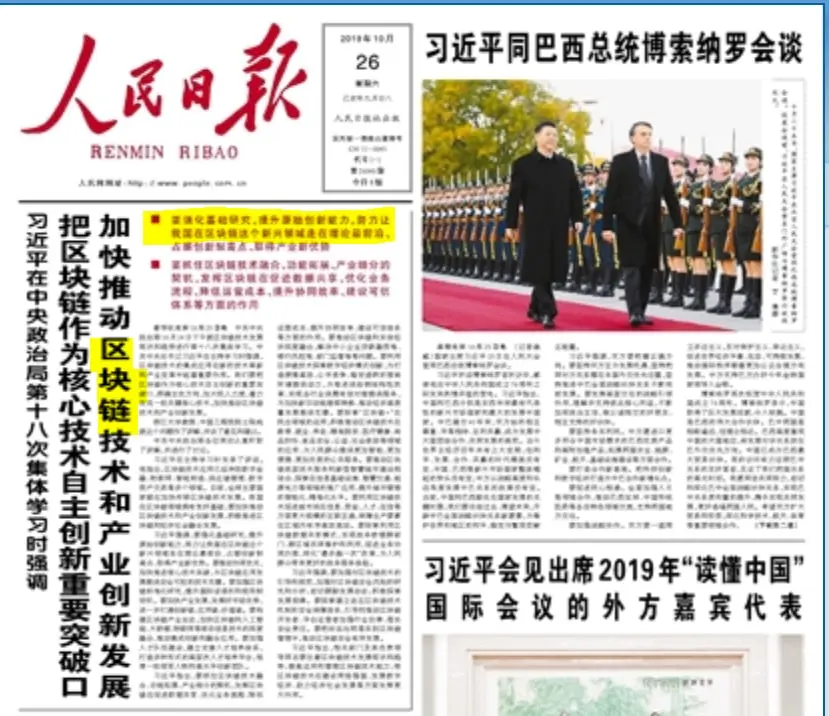
This huge initiative to push Blockchain is clearly related to the launch of China’s National Digital Currency – “DCEP” (Digitial Currency / Electronic Payment). This new currency is issued by the People’s Bank of China (PBoC), and will act as both a replacement for Researve Money (M0) and as a digital cash. DCEP will initially be rolled out to banks affiliated with PBoC and eventually to the general public via Tencent and Alibaba.
It is important to point out the DCEP will be a centralized & private blockchain. New currency on the network will be issued by the PBoC via authority from the Chinese Government. There will be no public participation in the network, unlike the decentralized Bitcoin network which uses Blockchain to form an open public consensus.
Did China REALLY Pump Bitcoin? is it REAL?
Watch on YouTubeBlockchain, Not Bitcoin
One of the key areas of contention in the cryptocurrency space is whether a private or centralized Blockchains have value.
- Opinion 1: Bitcoin, not Blockchain
- Opinion 2: Blockchain, not Bitcoin
Proponents of Bitcoin argue that Blockchain’s key value is that it allows for a decentralized network, a leaderless network where anyone can join, participate and verify transactions. The argument is that if the purpose of a Blockchain is record transactions like a database, centralized databases like MySQL or MongolDB will have higher efficiency than Blockchain. Thus, it would only make sense to use Blockchain when there is a need for public open consensus. Following this argument, cryptocurrencies like Bitcoin and Ethereum are neccessary for a Blockchain to function, as they play an intrinsic role in rewarding good actors on the network.
Proponents of Blockchain argue that the Blockchain offers security and transparency, giving it a distinct advantage over traditional databases. China takes this argument one step further and actively discourages the use of cryptocurrencies and trading in cryptocurrencies (eg. Cryptocurrency exchanges are banned in China).
Government condones “Air Coins” and Cryptocurrency Speculation
State media People’s Daily have explicitly condoned cryptocurrency speculation and brought accusations against “air currency”. Air Currency, or air coins, is a chinese colloquial term used for cryptocurrencies that have no intrinsic value, very much like air. This move is designed to counter-act the surge in rushed venture capital investments into different cryptocurrencies in China, many of which don’t have a real use-case. In addition, the article explicitly called for illegal transactions and money laundering to be rectified, suggesting further enforcement actions against none state regulated cryptocurrencies. This heavy enforcement can be seen as a “stick” measure to push users away from decentralized cryptocurrencies into the centralized national currency, DCEP.
“Blockchain is a Scam” is Censored by Social Media
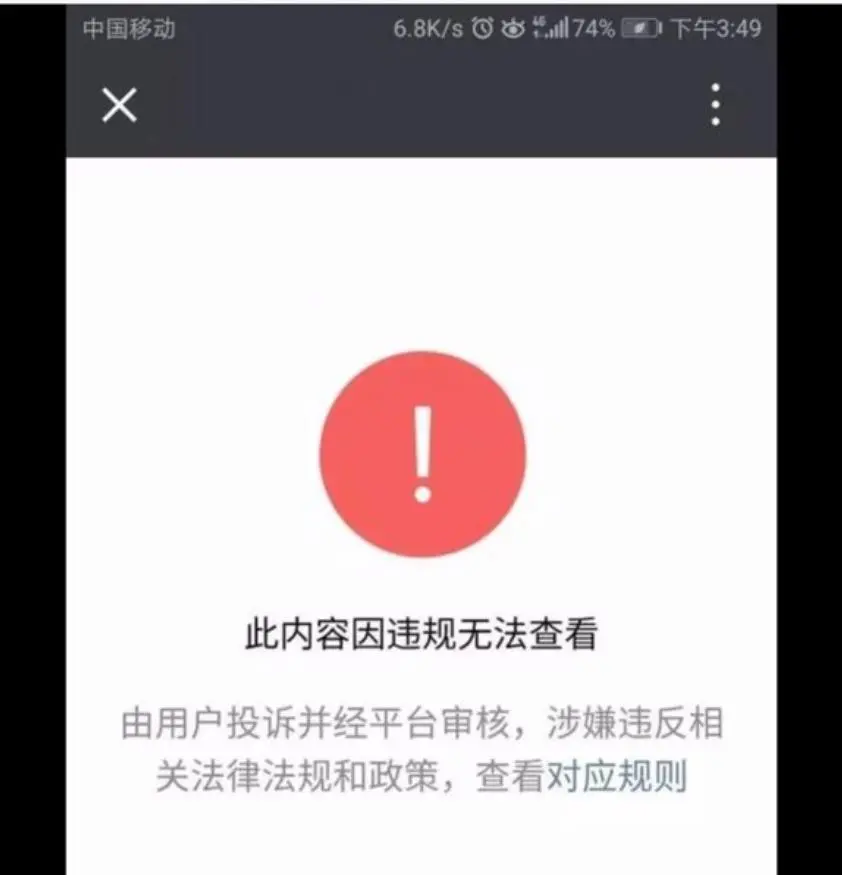
Experiments done by @cn_Ledger and other Chinese media sources have found that articles calling Blockchain a “scam” are actively being censored in China. Anyone posting these articles will find that they are quickly deleted and may face potential account suspensions. This type of media content control is standard in China once the Central Party issues a particular doctrine. Media platforms are quick to comply, or they will risk the removal of their ICP license.
Cryptocurrency Mining is no longer “Banned” in China
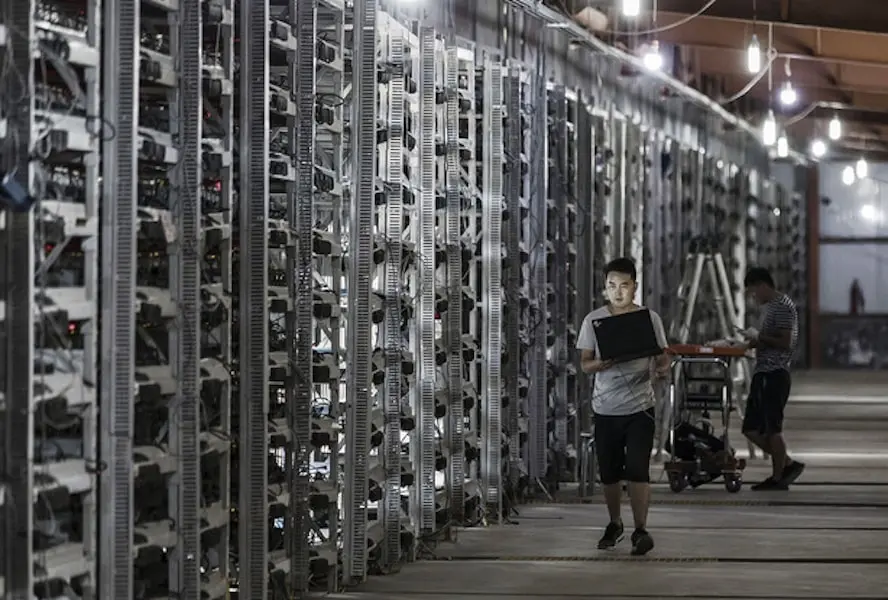
The Chinese Government is no longer pushing for the elimination of cryptocurrency mining (such as Bitcoin and Ethereum mining). This is a complete 180° reversal of government policy will take effect on 1 Jan 2020, meaning mining will a legal and taxable industry in China. Previously “Cryptocurrency Mining” was part of a list of industries to be eliminated. This change comes directly from the new edition of China’s Industrial Structure Adjustment Guidance Catalog, where an updated revision no longer mentions cryptocurrency mining as an industry to be phased out.
Traditionally China has always played a major role in Bitcoin, Ethereum, Litecoin and DASH mining. This is mainly due to the abundant supply of cheap electricity in China (especially in the Sichuan and Mongolian regions), where electricity costs can go as low was $0.02 USD per kw/h. To find more about Bitcoin mining, check out our full Bitcoin mining guide.
Overall this policy reversal sends strong positive signals about cryptocurrencies in China. This is a clear indicator that the Chinese Government recognizes the importance of mining and it’s role in decentralized public Blockchains. Such policy changes suggest a positive future where other policies halting cryptocurrency development could be reversed.
Cryptocurrency trading is still banned
China has banned cryptocurrency trading since 2017. The government has taken down chinese operation of big fiat exchanges such as OKex, Huobi and BTChina. Chinese exchanges no longer have fiat bank accounts. As users move to peer to peer trading. Alipay has made it clear that it will not tolerate crypto trading on it’s platform.
If any transactions are identified as being related to bitcoin or other virtual currencies, @Alipay immediately stops the relevant payment services.
— Alipay (@Alipay) October 10, 2019
What about Chinese Blockchain projects like Vechain and NEO
Whilst China’s Blockchain Initiative explicitly discourages the speculation in cryptocurrencies – Blockchain projects are thriving in China. This is a Cryptocurrency is a core part of Blockchain – Satoshi Nakamoto created Bitcoin and Blockchain together in his 2009 white paper. So whilst the Publications by the central government tries the downplay cryptocurrency speculation, every public cryptocurrency network must have an associated platform token.
Having the Blockchain initiative being pushed forward will greatly help the adoption of projects like Vechain in China. At the end of the day, the government validated the value proposition of Blockchain, answering many skeptics who are critical of Blockchain’s real life use case.
Frequently asked questions
Is cryptocurrency legal in mainland China?
Virtual currency is not legal tender, and the February 2026 multi-agency notice treats exchange, brokerage, token-financing and related commercial services as illegal financial activities. Individual property disputes can be more nuanced, so obtain current local legal advice for a specific case.
Can people trade Bitcoin through an exchange in mainland China?
Mainland authorities prohibit businesses from providing virtual-currency exchange services. The 2026 notice also bars foreign entities and individuals from illegally offering virtual-currency services to mainland subjects and restricts payment, marketing and technical support.
Is Bitcoin mining legal in China?
The current national policy is a crackdown, not the temporary reprieve described in 2019. The February 2026 notice continues the 2021 measures, prohibits new mining projects and directs authorities to close remaining projects.
Did China ban blockchain?
No. Mainland China distinguishes blockchain technology from speculative cryptocurrencies. It continues to promote permissioned and enterprise blockchain applications while restricting public-token trading and mining.
What did Xi Jinping say about blockchain?
At a Politburo study session on 24 October 2019, Xi called blockchain an important breakthrough for independent innovation and urged development of the technology and industrial applications. The remarks were not an endorsement of Bitcoin trading.
Is the digital yuan a cryptocurrency?
e-CNY is China's sovereign fiat currency in digital form and is centrally managed by the PBOC through a two-tier operating system. It is legally and operationally different from decentralized cryptocurrencies such as Bitcoin.
Does e-CNY run on a blockchain?
The PBOC describes a hybrid framework combining centralized and distributed architecture, not one ordinary public or private blockchain. Authorized operators may use different technical paths within the central bank's rules.
Has e-CNY replaced cash in China?
No. The PBOC said e-CNY would coexist with physical RMB and that cash would continue to be supplied while people demand it. The digital-yuan system has expanded through pilots and an updated 2026 management framework.
Are Hong Kong's crypto rules the same as mainland China's?
No. Hong Kong has its own virtual-asset licensing and financial regulatory system. Access permitted under Hong Kong rules does not make an activity lawful for a mainland resident or mainland-facing business.
Does supporting blockchain mean China supports coins such as NEO or VeChain?
No. General support for blockchain technology is not approval of a specific token, issuer or investment. A project's company activity, network access and token trading each require separate legal and technical analysis.
Sources
- People's Daily coverage of the October 2019 Politburo blockchain study session
- 2021 MIIT/CAC guidance on blockchain technology and industry development
- Historical September 2021 virtual-currency trading notice
- NDRC explanation of the September 2021 virtual-currency mining crackdown
- PBOC November 2025 meeting reaffirming virtual-currency restrictions
- Eight-agency Notice No. 42 of 2026, which superseded the 2021 notice
- PBOC and CSRC explanation of the 2026 virtual-currency and RWA rules
- PBOC 2021 e-CNY research and development paper
- Official e-CNY management framework effective in 2026
- Ethereum.org: The Merge ended Ethereum proof-of-work mining
Share
Found this useful?
Share it with someone who'd want to read it.
Related

China BSN Status 2026: DDC, Spartan Network and Origins
China's Blockchain-based Service Network remains online but now spans distinct domestic, enterprise and overseas products. See what became of BSN, DDC and Spartan Network, plus corrections to the 2020 launch guide.
China Crypto Exchange Ban: What the 2017 Rumor Became
A September 2017 report that China would close crypto exchanges was soon confirmed. This update traces the ICO ban, exchange shutdowns, 2021 rules and the 2026 policy that superseded them.
Does Bitcoin Drop for Chinese New Year? 2019–2026 Data
Does Bitcoin really dump around Chinese New Year? Binance BTC/USDT daily closes for the official 2019–2026 Spring Festival holidays show mixed pre-holiday returns and six positive holiday periods.