

Harmony ONE status: read this before using an old guide
Checked October 22, 2026: Harmony began as a sharded proof-of-stake blockchain; ONE was its native token for fees and staking. That description now needs a major qualification. In its October 5 end-of-support notice, infrastructure provider Ankr reports that Harmony stopped producing blocks on September 10, 2026. Ankr retired its Harmony RPC endpoint. Tatum also announced the removal of its hosted Harmony networks following the network sunset and planned ONE migration to Ethereum.
Treat the 2019 launch coverage below as historical context, not instructions for using an active layer-1 network. The old Binance sale price, roadmap and validator hardware proposal are launch-era details, not current offers or operating requirements.
What does the Ethereum migration mean for ONE holders?
Tatum’s September 25 notice describes a final-block snapshot and replacement ERC-20 ONE balances on Ethereum. It also says multisig safes, liquidity pools and onchain applications cannot migrate, and tells developers to use the replacement token contract once Harmony publishes it. A token balance migration does not move an application’s code, liquidity or positions to Ethereum.
This review does not verify a completed distribution or a replacement token contract address. Check Harmony’s official channels and your exchange’s own notices for the asset and network it supports before transferring funds. An old Harmony RPC setting or a token with the ticker ONE is not sufficient evidence that a migration address is authentic. Never enter a seed phrase into a migration or recovery website; see our private-key guide.
How Harmony’s original network worked
Harmony’s sharding documentation describes splitting state, validator communication and transaction processing across shards. The aim was parallel processing, with each shard maintaining its own state rather than every validator handling the entire network. This explains the original design; it is not a claim about live capacity after the sunset.
Its Effective Proof-of-Stake documentation describes a mechanism intended to limit concentration by bounding effective stake around the median validator-key stake. Delegators shared validator rewards after commission, and double-signing could slash both validator and delegated funds. The tokenomics documentation identifies ONE as the native fee token. These mechanics explain ONE’s original utility, rather than establish utility for a replacement Ethereum token.
Historical staking terms are not a yield offer
Harmony’s legacy staking FAQ lists a 100 ONE delegation minimum and a seven-epoch withdrawal wait. It also says rewards vary with validator performance and network stake. Those are archived protocol terms, not a recommendation to delegate now. With the network sunset reported by infrastructure providers, old dashboard returns and epoch estimates should not be presented as available yields. For the general mechanism, read proof of stake explained.
The Horizon bridge exploit changed the risk picture
Harmony’s official incident summary documents the June 23, 2022 Horizon bridge theft of approximately $100 million. It describes compromise of bridge infrastructure and signing access. This was a bridge-security failure: a chain’s consensus design alone does not establish the safety of assets held through a separate bridge.
For holders, native ONE and bridged representations of other assets carry different risks. A bridged token depends on its backing and redemption system; matching a familiar ticker does not guarantee equivalent value or redeemability. Recovery proposals should not be confused with completed repayments.
Boxmining’s take
Harmony’s original sharding pitch was technically interesting, but a protocol guide has to account for what happened after launch. The bridge loss and subsequent network sunset outweigh launch-era promises about speed and low costs when assessing practical usability. Verify the specific asset, supported network and migration status first. The 2019 interview remains useful for understanding the ambition, not for judging today’s operational risk.
FAQ
What is Harmony ONE?
Harmony was a proof-of-stake blockchain built around sharding. ONE served as its native fee and staking token. Following the 2026 sunset notices, readers must distinguish that historical role from the proposed Ethereum replacement token.
Is Harmony still producing blocks?
Ankr’s October 5, 2026 notice says the network stopped producing blocks on September 10. Tatum separately announced the retirement of its Harmony RPC services. This article does not treat legacy network documentation as proof of continuing operation.
Can I still use the old Harmony staking guide?
Use it to understand historical mechanics only. Do not assume old delegation instructions, withdrawal timings or estimated returns remain executable after the network sunset.
Has the ONE migration to Ethereum finished?
The primary provider notices checked for this refresh describe the migration plan and service retirement, but do not establish a completed token distribution or verify a replacement contract. Confirm those details through Harmony and the service holding your tokens before acting.
Original May 2019 launch coverage
The following article and interview are preserved as a record of Harmony’s launch positioning. Forward-looking statements, the Binance IEO and the roadmap refer to May 2019.
The Harmony (ONE) protocol takes on the challenge of scaling blockchain without sacrificing decentralization. This has been the holy grail of challenges because solving scaling usually involves sacrificing decentralization – however Harmony maintains an open-consensus where anyone can join. This is achieved by:
- Proof-of Stake – Harmony holders can participate in network consensus and improve network security
- Deep Sharding – network is split into different teams or “shards” that work together and increase transaction efficiency
- Network Optimized – Network communications are split into small fragments and shared (Kademlia routing)
Harmony protocol has a sharding-based, fully scalable, secure and efficient blockchain. This means that the consensus mechanism can provide the blockchain solution necessary for the future of DApps. Even though Proof of Work networks were initially highly decentralized this element can be diluted with high usage. As such, the consensus mechanism for Harmony ensures it is still decentralized and permission-less. These are critical parts of future relevance and sustainability.
Check out the Boxmining interview with the Co-Founder of Harmony Protocol, Nick White for an introduction to the project.
The Competitive Scalability Field
Providing scalability is a noble endeavor and unsurprisingly, Harmony will not be first to do it. This is because the field already features an array of running projects that also aim to provide the same solution. These rival projects include: EOS, Zilliqa, Algorand, and others. Harmony distinguishes itself by having a solid proof-of-stake system with state sharding. State sharding splits the network into teams that work together. This allows the network to grow faster as more nodes are added (rather than stay stagnant). Chains and transactions are co-ordinated by a beacon chain.
“Neither of the projects mentioned above has a blockchain which will be performant, scalable, and as low cost as the Harmony blockchain will be.”Nick White, Co-founder of Harmony
Co-founder Nick White touts the fact that Harmony has advantages over and above typical scalability projects. These are in the form of improved user experience, reduction of costs and the ability to support larger user bases for the decentralized app community. This will in turn draw more developers and projects to be a part of the Harmony project community.

Needless to say, the target audience is not only limited to DApps developers but also established companies with greater user bases who wish to integrate blockchain technology into their products. White contends that such apps have had the problem of slow and existing networks. Harmony, on the other hand, makes their operations possible by efficient and affordable solutions.
The Challenge of Attracting New Nodes
Attracting new nodes to the network is definitely an issue for the network. To this matter, their Co-Founder and CEO, Stephen Tse stated as follows:
“Harmony is building a robust ecosystem and we are in talks with every major staking as a service company to bring them on board and help grow Harmony’s validator ecosystem.”
As such, the project has a proposal to lower the barrier for those who wish to participate in the network. This is in the form of lower resource requirements (specfically, 4GB) for new entrants. In addition, Harmony will write scripts that will make the initial setup simple as well as block rewards for staking. The economic model that underlines that is yet to be clear but stakers have the assurance of rewards for participation.
Binance Partnership
Binance exchange has recently announced the upcoming Harmony Protocol Initial Exchange Offering (IEO). This IEO will take place on 28th May 2019 and aims to raise funds for a project whose operation is a lot like its name. This is because the idea of providing a pertinent demand for cryptosphere, scalability, is something that can draw on collective human collaboration in the innovative platform.
The Binance IEO has been known to be a boost for its featured projects. This is because of the marketing catalyst as well as investor attraction. As such, Harmony can reach millions more with the Binance partnership. The partnership will also be in line with Harmony’s vision to provide scalability to billions across the world.
White stated that the team has motivation from the global outlook that Binance provides. Blockchain technology has the potential to transform the lives of those both in developed and developing countries. This means that parts of Africa and Latin America, both within the scope of Harmony targets, can also achieve meaningful progress.
With that in mind, the Binance Launchpad will take place on 28th May 2019. Notably, the process will follow the lottery format that is typical of Binance now. The token price is $0.003175 for one Harmony (ONE) token with a hardcap of US$5 million.
Verdict
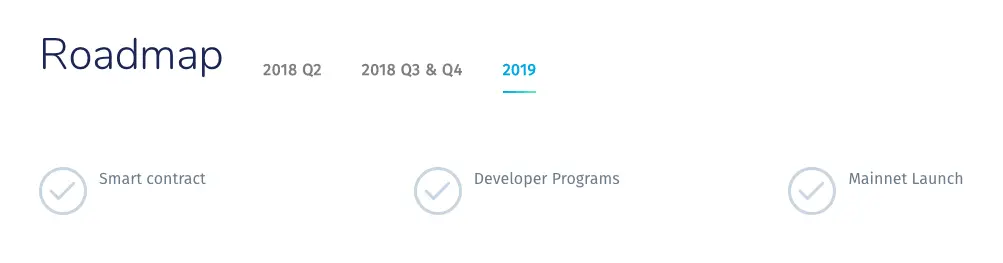
In summary Harmony makes a solid stab at tackling blockchain scalablity whilst keeping an open consensus. The highlight of Harmony is the ability to do state sharding rather than simple transactional sharding, allowing more headroom for future scaling without congesting beacon chains.
Share
Found this useful?
Share it with someone who'd want to read it.
Related

Cardano ADA Guide: Staking, Smart Contracts and Governance
How Cardano, ADA, Ouroboros staking, native assets, Plutus smart contracts and the post-Plomin on-chain governance system work.
Kusama ($KSM): How is it Polkadot’s wild cousin?
Kusama is Polkadot’s faster-moving canary network. Learn how KSM, parachains, governance and experimentation differ from the main Polkadot ecosystem.

Algorand (ALGO) Guide
Algorand is a high-performance next-generation blockchain whose goal is to create a transparent system in which everyone can achieve…