

The “Binance Chain” described in this 2019 article was later renamed BNB Beacon Chain. It is no longer an active blockchain: the chain stopped at block 385,251,927 on 3 December 2024 as part of BC Fusion. Its staking, governance and other relevant functions moved to BNB Smart Chain (BSC), the EVM-compatible chain that uses 0x addresses.
The old Binance DEX and normal BEP-2 transfers are therefore historical. Users who still have recoverable assets in the Beacon Chain snapshot must follow the current BNB Chain recovery documentation. The hosted recovery tool entered a staged sunset in 2026, with the project announcing a self-service open-source process from 1 July 2026.
Critical warning: Never send assets to an old
bnb1...address by following the archived instructions below. Verify the destination chain, token contract and address format before every withdrawal. A recovery tool may require signing with the legacy account, but no legitimate tool needs you to send a seed phrase to support staff or enter it on an unverified site.
BNB Chain status in 2026
| 2019 component | Current status |
|---|---|
| Binance Chain | Renamed BNB Beacon Chain and shut down in December 2024 |
bnb1... BEP-2 addresses | Legacy only; active BSC accounts use EVM-style 0x addresses |
| Binance DEX order book | Decommissioned before the Beacon Chain shutdown |
| BEP-2 token issuance | Historical; BSC uses EVM smart contracts and BEP-20 tokens |
| Beacon Chain staking and governance | Migrated to BNB Smart Chain through BC Fusion |
| ERC-20-to-BEP-2 BNB swap | A completed 2019 migration, not a current user task |
| Legacy BEP-2 recovery | Limited to eligible snapshot assets and the current official recovery process |
What is BNB Smart Chain?
BNB Smart Chain is the active EVM-compatible execution layer in the BNB Chain ecosystem. It supports smart contracts, decentralized applications and BEP-20 tokens. BNB pays transaction fees and participates in staking and governance mechanisms.
EVM compatibility does not make an Ethereum token automatically usable on BSC. The same-looking 0x address can exist on multiple networks, while token contracts and balances remain chain-specific. Users must select BSC explicitly and verify the token contract and receiving platform’s supported network.
The broader BNB Chain ecosystem also includes opBNB and BNB Greenfield, but they are separate systems with their own transactions, bridges and risks. “BNB Chain” can refer to the ecosystem; it should not be confused with the retired 2019 chain.
Recovering legacy BEP-2 assets
BC Fusion created a snapshot and recovery route for certain BNB and BEP-2/BEP-8 assets that were properly bound or mirrored to BSC. The official documentation warns that some unbound assets and small legacy staking balances are not recoverable.
Recovery availability, timing and tooling are changing. Check the BNB Chain announcements and BC Fusion documentation before acting. Confirm that the asset is eligible, use the published open-source tool or current official route, and test with the smallest practical amount where possible.
Main BNB Chain risks
- Wrong-network risk: BSC, Ethereum, opBNB, Greenfield and the retired Beacon Chain are not interchangeable.
- Legacy-asset risk: not every BEP-2 or BEP-8 balance is recoverable after shutdown.
- Phishing risk: fake fusion and recovery tools target users who still hold legacy keys.
- Smart-contract risk: BSC applications and BEP-20 tokens can contain exploitable or malicious code.
- Bridge risk: moving assets between networks adds contract, validator and liquidity risks.
- Validator risk: BSC’s validator and governance design differs from Ethereum and Bitcoin.
- Custody risk: holding BNB on an exchange depends on that exchange’s solvency and withdrawal support.
Original May 2019 Binance Chain guide (historical archive)
The original author-written sections below are preserved substantially intact. Its ERC-20 swap, BEP-2 addresses, Binance DEX and token-issuance discussion documents the 2019 launch. One Binance referral parameter was removed during link cleanup.
*Update: Added information about Binance Chain Memos and new withdraw panel
Binance just launched the Mainnet for Binance Chain – and there are significant changes such as a “BNB token swap” that you MUST know about. The Binance Token (BNB) will no longer be on the ethereum chain (ERC-20 Token), instead it will be fully migrated to Binance chain (BEP-2). This means if you hold BNB on an ethereum wallet, you must pay special attention or you might accidentally send it to the wrong address.
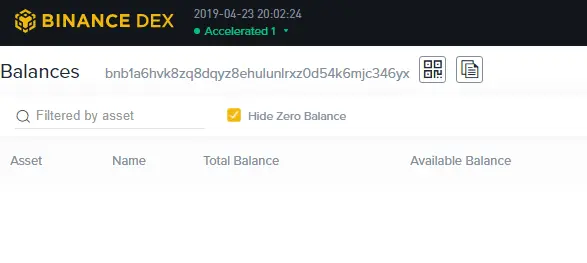
Read more about Binance and features in our Binance Exchange Review
Binance BNB Token Swap
Binance has started the token swap for $BNB tokens. In the future, BNB address will begin with “bnb……” format instead of the ethereum “0x…” address.
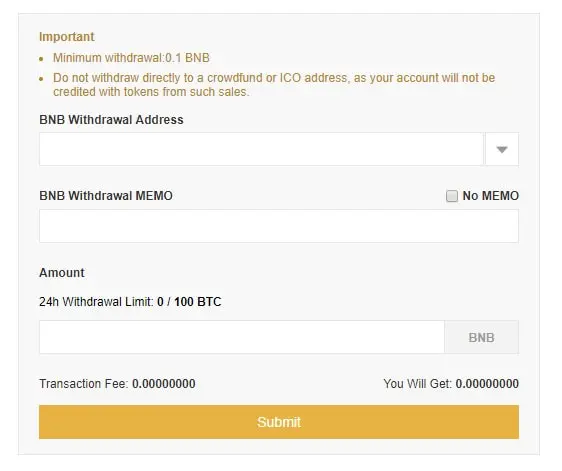
- BNB kept on Binance.com will automatically be swapped – no manual operation required. The new withdraw page will automatically use the Binance Chain address.
- To deposit Ethereum based tokens based on the ERC-20 standard, $BNB tokens can be sent to the Ethereum deposit address on the Exchange.
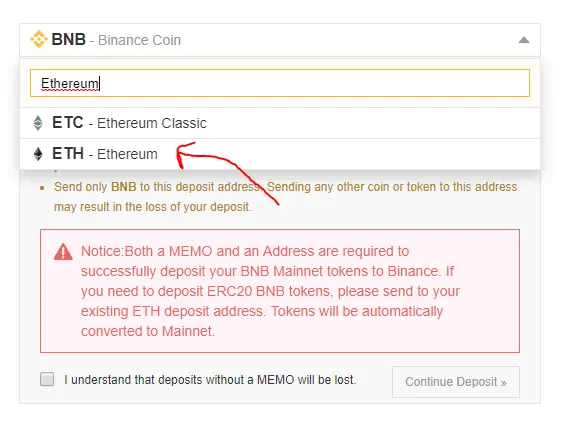
Once ERC20 BNB is deposited into the exchange, the token will be automatically swapped.
BNB Token Supply and Functionality
In terms of total supply, the amount of BNB remains the same. The initial supply of BNB will be 200,000,000 and 11,654,398 BNB will be burned on Binance Chain. Binance will burn ERC20 BNB tokens to keep the total supply constant as the token swap takes place
Binance DEX
Binance DEX has officially launched at Binance.org. This Decentralized Exchange is designed for advanced users who want to keep self-custody of their cryptocurrency assets (as opposed to centralized exchanges where funds are kept by exchanges).
Currently Binance DEX support their own token standard, the BEP2 token. For coins to be listed on the DEX, they need to be migrated to the Binance Chain. Whether coins are willing to migrate depends on what features they need:
- Faster transactions – Accelerators and small number of Validators mean confirmation times are much faster
- Centralized – Validators are pre-authorized and consensus is not open to general public
- No smart contract support – Binance Chain is transaction only
Binance to Challenge Ethereum as top Token Issuance Platform?
With the introduction of the BEP2 token standard, Binance Chain can allow projects issue tokens via Initial Coin Offerings (ICO) or Initial Exchange Offerings (IEO). This feature allows BinanceChain to rival the ERC20 standard Ethereum which has been used by many popular projects such as Basic Attention Token (BAT) and OmiseGo (OMG). What sets BEP2 tokens apart is that it has a faster confirmation time and access to Binance DEX.
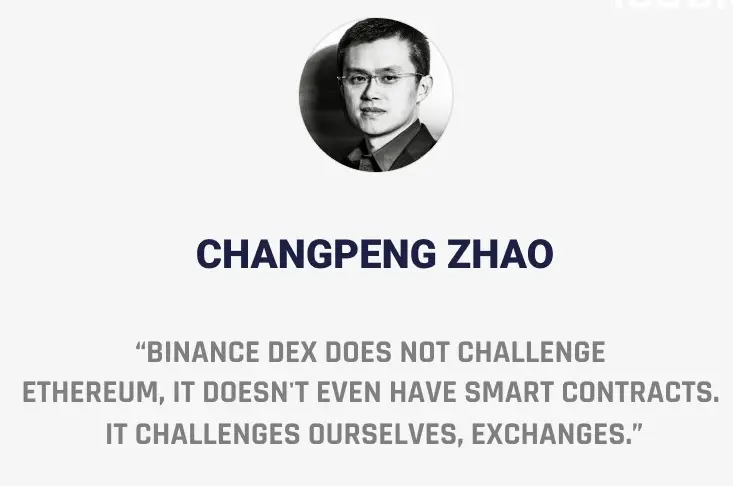
Whilst many have questioned if the success of Binance Chain would mean the demise of Ethereum, CEO Changpeng Zhao has denied this claim.
Currently Mithril (MITH) has chosen to migrate to be the first token to be migrated to the Binance Chain.
Disclaimer: Cryptocurrency trading involves significant risks and may result in the loss of your capital. You should carefully consider whether trading cryptocurrencies is right for you in light of your financial condition and ability to bear financial risks. Cryptocurrency prices are highly volatile and can fluctuate widely in a short period of time. As such, trading cryptocurrencies may not be suitable for everyone. Additionally, storing cryptocurrencies on a centralized exchange carries inherent risks, including the potential for loss due to hacking, exchange collapse, or other security breaches. We strongly advise that you seek independent professional advice before engaging in any cryptocurrency trading activities and carefully consider the security measures in place when choosing or storing your cryptocurrencies on a cryptocurrency exchange.
Frequently asked questions
Is the original Binance Chain still active?
No. The chain, later called BNB Beacon Chain, stopped at block 385,251,927 on 3 December 2024.
What replaced BNB Beacon Chain?
Its relevant staking, governance and ecosystem functions moved to BNB Smart Chain through the BC Fusion program.
Is Binance DEX still operating?
The Beacon Chain order-book DEX described in the 2019 guide was decommissioned and is not a current trading venue.
What is the difference between BEP-2 and BEP-20?
BEP-2 was the retired Beacon Chain token format using legacy addresses. BEP-20 is the EVM-compatible token format used on BNB Smart Chain.
Can I still send to a bnb1 address?
Do not use an old Beacon Chain address for a new transfer. The retired chain no longer processes normal transactions.
Can legacy BEP-2 tokens be recovered?
Some snapshot assets that were properly bound or mirrored can be recovered, but others are permanently unavailable. Eligibility must be checked in the official BC Fusion documentation.
Does BNB Smart Chain support smart contracts?
Yes. BSC is EVM-compatible and supports smart contracts, decentralized applications and BEP-20 tokens.
Does a matching 0x address make BSC and Ethereum the same network?
No. The address format is compatible, but balances, token contracts and transaction histories are separate on each chain.
Is BNB recovery support allowed to ask for my seed phrase?
No support agent should receive it. Use only verified official or published open-source tooling, and never send a recovery phrase through chat or email.
Is BNB Chain the same as Binance exchange?
No. BNB Chain is a blockchain ecosystem, while Binance is a centralized exchange. They have distinct custody, technical and regulatory risks.
Sources and further reading
Share
Found this useful?
Share it with someone who'd want to read it.
Related
Binance Exchange and BNB: Launch-Era Guide Updated
A current overview of Binance exchange, its fees, custody and regional risks, plus a preserved 2017 snapshot showing how Binance and BNB began.

What Is BNB? BNB Chain Uses, Burns, Staking and Risks
BNB is the native coin of BNB Smart Chain, opBNB and Greenfield. Learn its history, gas and staking uses, burn mechanics and major risks.

What Happened to Harmony ONE? Inside the 4 Billion Token Exploit
Harmony patched a cross-shard replay flaw after roughly 4 billion ONE appeared without authorization. The incident follows years of bridge losses, token inflation and failed recovery.